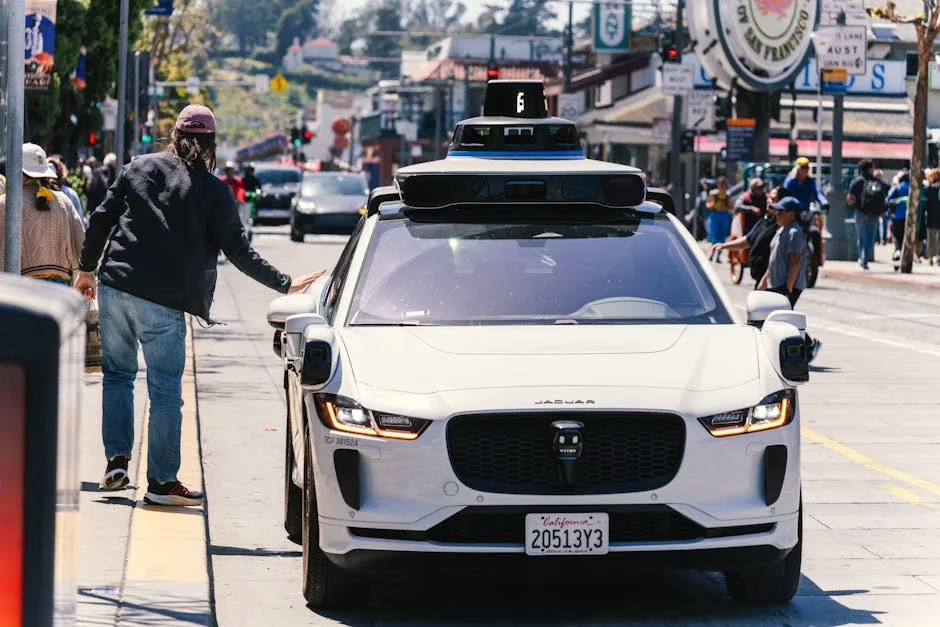

The autonomous vehicle industry is experiencing an unprecedented talent crisis as companies like Tesla and Waymo compete with defense contractors and robotics firms for skilled AI engineers. According to TechCrunch, base salaries for autonomous vehicle talent have skyrocketed to between $300,000 and $500,000, marking a dramatic escalation in what industry insiders describe as “talent wars.”
This surge comes as the broader AI industry demonstrates explosive growth, with companies adopting artificial intelligence faster than any previous technology, including personal computers and the internet, according to Stanford University’s 2026 AI Index.
The Great AI Talent Migration
The current talent shortage stems from an unexpected source: the booming “physical AI” sector. Defense contractors, robotics companies, and industrial automation firms are aggressively recruiting engineers who previously focused on self-driving cars and autonomous trucks.
What makes these engineers so valuable? They possess a rare combination of classical robotics knowledge and modern AI expertise. This hybrid skillset allows them to integrate machine learning algorithms with physical hardware systems – whether that’s a Tesla Model 3’s autopilot system, Waymo’s robotaxi fleet, or autonomous construction equipment.
Defense contractors have emerged as the most aggressive recruiters, backed by substantial Department of Defense budgets. They’re targeting professionals with titles like “applied researcher” and “AI enablement engineer” – roles that translate directly from automotive applications to military robotics and autonomous defense systems.
The competition has forced traditional automakers and startups to dramatically increase compensation packages or risk losing critical talent to better-paying opportunities outside the automotive sector.
ADAS Features Driving User Adoption
While companies battle for talent behind the scenes, consumers are embracing Advanced Driver Assistance Systems (ADAS) at an unprecedented rate. Modern ADAS features have evolved far beyond basic cruise control to include sophisticated capabilities that genuinely improve the driving experience.
Popular ADAS features transforming daily commutes include:
- Adaptive cruise control that maintains safe following distances automatically
- Lane keeping assist that gently steers vehicles back into their lanes
- Automatic emergency braking that can prevent rear-end collisions
- Blind spot monitoring with visual and audible alerts
- Traffic sign recognition that displays speed limits on dashboards
Tesla’s Autopilot and Full Self-Driving (FSD) features represent the most advanced consumer-available systems, though they still require driver attention. Users report that these systems excel on highways and well-marked roads but struggle in complex urban environments with construction zones, unusual intersections, or poor weather conditions.
Waymo’s approach differs significantly – their vehicles operate without human drivers in specific geographic areas, but this service remains limited to Phoenix, San Francisco, and Los Angeles.
Enterprise AI Development Accelerating
The automotive industry’s AI advancement mirrors broader enterprise trends. According to VentureBeat, companies are implementing “spec-driven development” to manage autonomous AI agents safely at enterprise scale.
This approach requires AI systems to work from detailed specifications that define expected behavior before writing any code. For automotive applications, this means ADAS features must meet rigorous safety standards and perform predictably across millions of driving scenarios.
Real-world benefits for car buyers include:
- More reliable ADAS performance across different vehicle models
- Faster deployment of new safety features through software updates
- Better integration between different automotive AI systems
- Reduced risk of unexpected system behavior
Some development teams report cutting feature development timelines from two weeks to two days using these advanced AI development methods, potentially accelerating the rollout of new automotive safety features.
Infrastructure Challenges and Costs
The rapid advancement in automotive AI comes with significant infrastructure requirements. AI data centers supporting autonomous vehicle development now consume 29.6 gigawatts of power globally – enough electricity to power the entire state of New York at peak demand, according to the MIT Technology Review.
This massive energy consumption raises important questions about the sustainability of AI development, particularly as automakers race to deploy more sophisticated autonomous features. The environmental impact extends beyond electricity usage, with water consumption from AI training potentially exceeding the drinking water needs of 12 million people annually.
Supply chain vulnerabilities also pose risks:
- Taiwan’s TSMC manufactures nearly all leading AI chips
- The US hosts most global AI data centers
- Chip shortages could delay automotive AI feature rollouts
- Geopolitical tensions could disrupt the AI hardware supply chain
These infrastructure challenges don’t directly impact current car buyers, but they could influence the pace of future ADAS improvements and the cost of vehicles with advanced AI features.
User Experience Improvements
Despite technical challenges, automotive AI continues delivering tangible benefits for everyday drivers. Modern ADAS systems excel at reducing driver fatigue during long highway trips and providing additional safety margins in heavy traffic.
User feedback consistently highlights:
- Reduced stress during stop-and-go traffic with adaptive cruise control
- Increased confidence when changing lanes with blind spot monitoring
- Better fuel economy through optimized acceleration and braking patterns
- Enhanced safety for new or nervous drivers
However, users also report frustration with systems that intervene unnecessarily or fail to recognize legitimate driving situations. The most successful implementations balance automation with driver control, allowing users to override AI decisions when needed.
Interface design plays a crucial role in user acceptance. Clear visual indicators, intuitive controls, and consistent system behavior help drivers understand when AI features are active and how to interact with them safely.
What This Means
The talent wars reshaping the autonomous vehicle industry reflect AI’s broader transformation from experimental technology to essential business infrastructure. For consumers, this competition ultimately benefits car buyers through accelerated innovation and more sophisticated safety features.
However, the industry faces a critical balancing act. Companies must invest heavily in talent retention while managing development costs that could impact vehicle pricing. The winners will likely be automakers that can attract top AI talent while delivering practical, user-friendly features that enhance rather than complicate the driving experience.
The infrastructure challenges also suggest that automotive AI development may face resource constraints that could slow progress or increase costs. Car buyers should expect continued improvements in ADAS capabilities, but potentially at a more measured pace than recent years.
FAQ
Q: How much do ADAS features typically cost when buying a new car?
A: Basic ADAS features like automatic emergency braking often come standard, while advanced packages with adaptive cruise control and lane keeping assist typically add $1,000-$3,000 to vehicle prices.
Q: Are self-driving cars safe enough for daily use?
A: Current “self-driving” features like Tesla’s Autopilot require constant driver attention and work best on highways. Fully autonomous vehicles like Waymo operate only in limited geographic areas with extensive mapping and testing.
Q: Will the talent shortage slow down automotive AI development?
A: While higher salaries increase development costs, the competition for talent is also driving innovation in AI development tools and methods that could actually accelerate progress in automotive applications.
For the broader 2026 landscape across research, industry, and policy, see our State of AI 2026 reference.