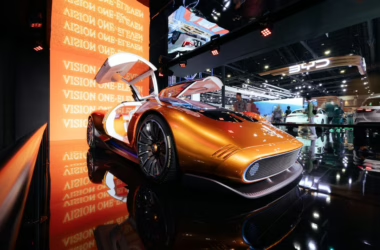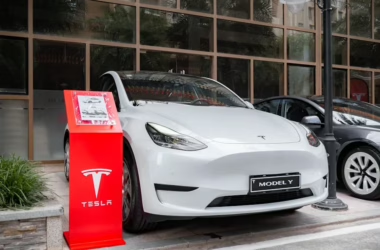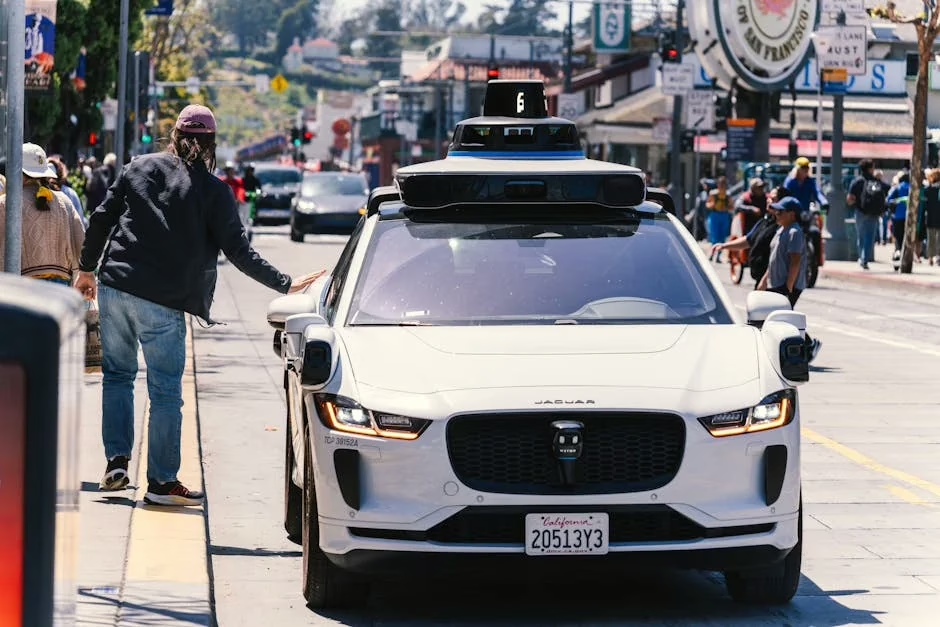

The automotive industry is experiencing a fundamental shift as artificial intelligence moves beyond software into the physical world. Companies like Tesla and Waymo aren’t just building self-driving cars—they’re pioneering a new approach to manufacturing that could transform how we make everything from vehicles to consumer electronics.
Beyond Traditional Automation
For decades, manufacturers have relied on traditional automation to boost efficiency and cut costs. But today’s leaders face a different challenge: growing amid labor shortages, rising complexity, and pressure to innovate faster without sacrificing safety or quality. The solution isn’t more isolated AI tools or individual robots—it’s intelligence that can operate reliably in the physical world.
This shift represents what experts call “physical AI,” where artificial intelligence systems can understand, interact with, and adapt to real-world environments in ways that traditional automation simply cannot.
Digital Twins: The Bridge Between Virtual and Physical
One of the most exciting developments in this space is the use of digital twins—virtual replicas of physical systems that allow manufacturers to test, optimize, and predict outcomes before implementing changes in the real world. Companies are using platforms like NVIDIA’s Omniverse to create these sophisticated simulations that accelerate design, engineering, and manufacturing processes across industries.
For automotive manufacturers, this means being able to test autonomous driving scenarios, optimize production lines, and even simulate entire vehicle lifecycles before a single physical prototype is built. It’s like having a crystal ball that shows you exactly how your manufacturing decisions will play out.
Real-World Impact for Consumers
What does this mean for everyday users? The benefits are already becoming visible:
Smarter Vehicles: Advanced Driver Assistance Systems (ADAS) are getting more intuitive and reliable. Features like automatic emergency braking, lane-keeping assist, and adaptive cruise control are becoming standard rather than premium options.
Better Quality Control: Physical AI systems can detect defects and quality issues that human inspectors might miss, leading to more reliable vehicles reaching consumers.
Faster Innovation: Digital twins allow manufacturers to iterate and improve designs much faster, meaning new safety features and technologies reach the market sooner.
The User Experience Revolution
From a user experience perspective, this technological evolution is making cars more like smartphones on wheels. The interface between human and machine is becoming more natural and intuitive. Instead of learning complex button combinations, drivers can interact with their vehicles through voice commands, gesture recognition, and predictive AI that anticipates their needs.
Tesla’s approach to over-the-air updates exemplifies this shift. Your car literally gets better while parked in your garage, receiving new features and improvements without requiring a trip to the dealership. This represents a fundamental change in how we think about product ownership and lifecycle.
Challenges and Considerations
While the potential is enormous, there are important considerations for consumers. Privacy and data security become crucial as vehicles collect and process vast amounts of information about our driving habits, destinations, and preferences. The user interface design must balance sophistication with simplicity—nobody wants to need a computer science degree to adjust their air conditioning.
Reliability is another key concern. As vehicles become more dependent on AI systems, manufacturers must ensure these technologies work consistently across different weather conditions, road types, and driving scenarios. The margin for error in automotive applications is essentially zero.
Looking Ahead
The convergence of physical AI, digital twins, and automotive manufacturing is creating unprecedented opportunities for innovation. As these technologies mature, we can expect to see more personalized driving experiences, improved safety features, and manufacturing processes that can adapt in real-time to changing demands.
For consumers, this means vehicles that are not just transportation tools, but intelligent partners that learn, adapt, and improve over time. The question isn’t whether this transformation will happen—it’s how quickly manufacturers can implement these technologies while maintaining the reliability and safety that drivers expect.
The automotive industry’s embrace of physical AI represents more than just technological advancement; it’s a fundamental reimagining of the relationship between humans and machines in one of our most essential daily activities: getting from point A to point B safely and efficiently.
Related news
Sources
For the broader 2026 landscape across research, industry, and policy, see our State of AI 2026 reference.