
The artificial intelligence revolution is fundamentally reshaping workforce dynamics across industries, from sparking intense talent wars in autonomous vehicle development to transforming manufacturing operations through physical AI systems. As companies compete for specialized AI expertise while simultaneously deploying automation technologies, the employment landscape faces unprecedented changes that demand new approaches to workforce planning and skills development.
The Great AI Talent Grab
The competition for AI talent has reached fever pitch, particularly in the autonomous vehicle sector. What was once described as a “knife fight” for talent between companies like Waymo has evolved into an all-out poaching war. Base salaries for specialized AI professionals now range between $300,000 and $500,000, not including equity and benefits packages.
This talent shortage reflects the critical importance of AI expertise in maintaining competitive advantage. Companies are not just competing for existing talent but are actively poaching experienced professionals from competitors, creating a cascading effect across the industry.
Manufacturing’s Physical AI Revolution
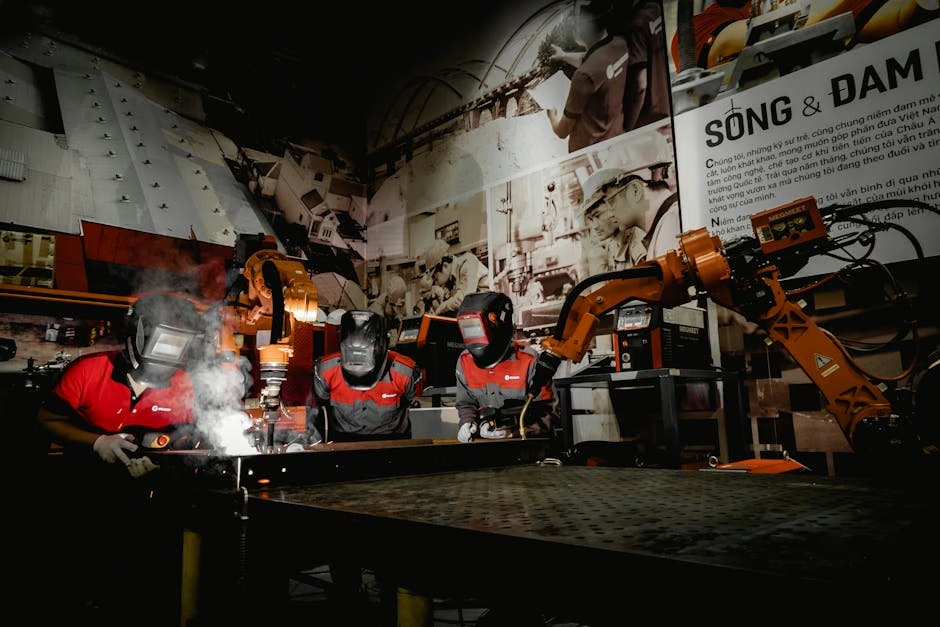
While the tech sector battles for AI talent, manufacturing is undergoing its own transformation through physical AI implementation. Traditional automation approaches that focused on efficiency and cost reduction are no longer sufficient for today’s complex manufacturing challenges.
Manufacturing leaders now face a different reality: growing amid labor constraints, rising operational complexity, and pressure to innovate faster without compromising safety or quality. The solution lies not in isolated AI tools or individual robots, but in comprehensive intelligence systems capable of operating reliably in physical environments.
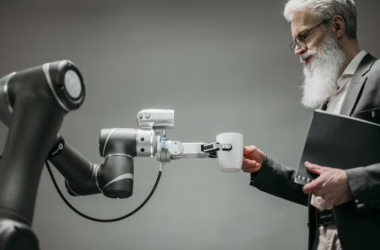
This shift represents a fundamental change from previous automation waves. Rather than simply replacing human workers with machines, physical AI systems are designed to work alongside human operators, augmenting capabilities and addressing labor shortages while maintaining operational excellence.
The Security Challenge of Distributed AI
As AI capabilities become more accessible through local deployment, new workforce challenges emerge. Developers are increasingly running AI systems locally, creating blind spots for security teams that previously relied on monitoring cloud-based AI interactions.
This shift toward on-device inference represents a significant change in how organizations manage AI deployment and oversight. The traditional model of controlling AI access through browser monitoring and cloud access security brokers is becoming less effective as AI capabilities move closer to individual workstations.
Workforce Implications and Future Outlook
The convergence of these trends suggests a workforce transformation that goes beyond simple job displacement. While some roles may be automated away, new categories of employment are emerging that require different skill sets:
High-Demand Roles:
- AI system designers and engineers
- Physical AI integration specialists
- Human-AI collaboration coordinators
- AI security and governance professionals
Evolving Requirements:
- Traditional manufacturing roles increasingly require AI literacy
- Security professionals must understand local AI deployment risks
- Management roles need AI strategy and implementation expertise
The salary premiums for AI expertise reflect not just current scarcity but the strategic value these professionals bring to organizations navigating digital transformation. As physical AI systems become more prevalent in manufacturing and other industries, the demand for professionals who can bridge the gap between AI capabilities and practical implementation will continue to grow.
Preparing for the AI Workforce Future
Organizations must take proactive steps to address these workforce changes:
- Invest in Reskilling: Existing employees need training to work effectively with AI systems
- Develop Retention Strategies: Competitive compensation and growth opportunities are essential for retaining AI talent
- Create Hybrid Roles: New positions that combine traditional expertise with AI capabilities
- Build Security Frameworks: Updated policies that account for distributed AI deployment
The AI workforce transformation is not a distant future scenario—it’s happening now. Companies that recognize and adapt to these changes will be better positioned to thrive in an AI-driven economy, while those that ignore the shift risk being left behind in the talent wars and technological advancement.
For the broader 2026 landscape across research, industry, and policy, see our State of AI 2026 reference.