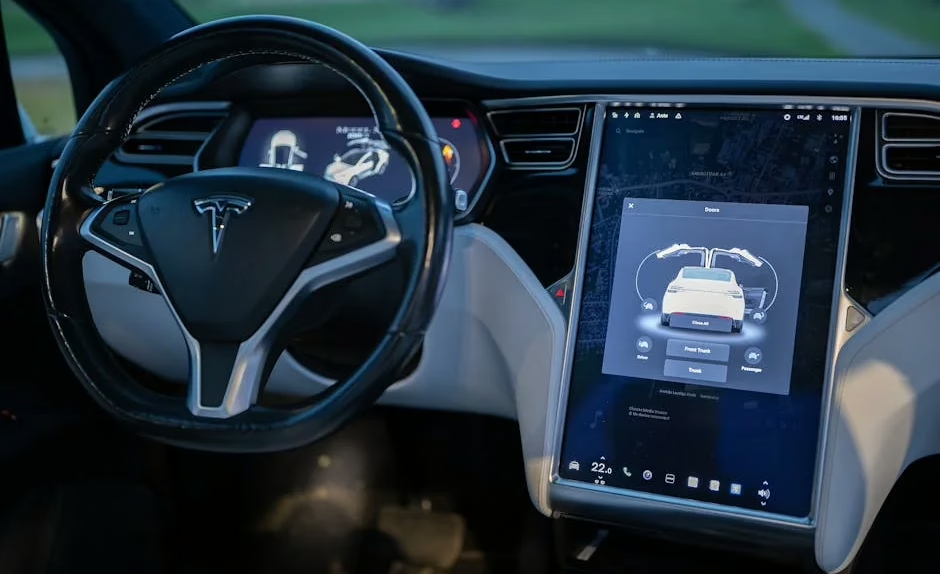

The automotive industry continues its rapid transformation as artificial intelligence becomes deeply integrated into everything from manufacturing processes to the driving experience itself. While traditional automakers scramble to catch up, companies like Tesla and Waymo are pushing the boundaries of what’s possible with AI-powered vehicles, creating new standards for safety, convenience, and user experience.
Current State of Automotive AI Technology
Today’s automotive AI landscape extends far beyond simple cruise control. Advanced Driver Assistance Systems (ADAS) now include features like automatic emergency braking, lane-keeping assistance, and adaptive cruise control that can handle stop-and-go traffic. These systems use a combination of cameras, radar, and sometimes LiDAR sensors to create a comprehensive understanding of the vehicle’s surroundings.
Tesla’s approach focuses heavily on vision-based AI, using multiple cameras and neural networks to interpret road conditions. Their Full Self-Driving (FSD) beta has shown impressive capabilities in real-world scenarios, though it still requires driver supervision. The system can navigate complex intersections, handle construction zones, and even make decisions about lane changes in heavy traffic.
Waymo takes a different approach, combining multiple sensor types including high-resolution LiDAR with advanced AI algorithms. Their vehicles have logged millions of autonomous miles in select cities, demonstrating the potential for truly driverless operation in controlled environments.
The user experience varies significantly between these approaches. Tesla’s system feels more like an advanced driver assistant that learns and improves over time, while Waymo’s technology aims for complete automation from the start.
Safety Features That Actually Matter to Drivers
Modern ADAS features translate into real-world safety benefits that drivers notice immediately. Automatic emergency braking can detect pedestrians, cyclists, and vehicles, applying brakes faster than human reflexes allow. According to insurance industry data, vehicles equipped with these systems show measurably lower accident rates.
Blind spot monitoring uses radar sensors to detect vehicles in adjacent lanes, providing visual and sometimes audible warnings when lane changes would be unsafe. This feature has become particularly valuable as vehicles have grown larger and visibility has decreased.
Lane departure warnings and lane-keeping assistance help prevent accidents caused by driver fatigue or distraction. The best systems provide gentle steering corrections rather than jarring alerts, making the technology feel helpful rather than intrusive.
From a user experience perspective, the most successful implementations of these features work seamlessly in the background. Drivers often don’t realize how much the technology is helping until they drive a vehicle without these features.
Electric Vehicles and AI Integration
Electric vehicles provide an ideal platform for advanced AI systems. Without the complexity of internal combustion engines, EVs can dedicate more computational resources to AI processing. The instant torque delivery of electric motors also enables more precise vehicle control for autonomous driving systems.
Tesla’s integration of AI extends beyond driving assistance to include over-the-air updates that continuously improve vehicle performance. Their vehicles can learn from the collective experience of the entire fleet, with improvements distributed to all vehicles simultaneously.
Battery management represents another area where AI makes a significant difference. Smart algorithms can optimize charging patterns, predict battery degradation, and maximize range based on driving habits and conditions. This technology helps address one of the primary concerns potential EV buyers have about range anxiety.
The user interface in AI-powered EVs has also evolved significantly. Voice commands can control climate settings, navigation, and entertainment systems, while predictive algorithms can pre-condition the cabin temperature based on calendar appointments and weather forecasts.
Real-World Performance and User Experience
The gap between marketing promises and real-world performance remains significant in automotive AI. While demonstration videos often show flawless operation, actual users report a more mixed experience that depends heavily on road conditions, weather, and traffic patterns.
Highway driving represents the sweet spot for current autonomous technology. Long stretches of divided highway with clear lane markings and predictable traffic patterns allow AI systems to perform at their best. Many drivers report feeling comfortable engaging these systems for extended periods on familiar routes.
Urban environments present much greater challenges. Construction zones, emergency vehicles, unusual traffic patterns, and pedestrian behavior create scenarios that current AI systems struggle to handle consistently. Users often find themselves taking manual control more frequently in city driving.
Weather conditions significantly impact system performance. Rain, snow, and fog can interfere with camera-based systems, while bright sunlight can create glare issues. The most practical systems gracefully degrade their capabilities and clearly communicate limitations to drivers.
Successful implementations focus on transparency, clearly indicating when systems are active and what they’re monitoring. The best user experiences come from systems that enhance rather than replace driver awareness.
Industry Competition and Innovation
The automotive AI space has become intensely competitive, with traditional automakers partnering with technology companies to accelerate development. General Motors has invested heavily in Cruise, while Ford has partnered with Argo AI (though that relationship ended in 2022).
Chinese automakers like NIO and XPeng are making significant advances in autonomous driving technology, often matching or exceeding capabilities offered by Western competitors. Their approach often emphasizes rapid iteration and deployment in controlled environments.
Supplier companies like Bosch, Continental, and Mobileye provide ADAS components to multiple automakers, creating a more standardized approach to safety features across brands. This ecosystem approach helps accelerate adoption while reducing costs.
The competitive landscape is driving rapid innovation, with new features and capabilities appearing regularly. However, the complexity of automotive AI means that meaningful improvements often take years to develop and validate.
What This Means
Automotive AI is transitioning from experimental technology to practical tools that improve daily driving experiences. While fully autonomous vehicles remain years away for most consumers, the incremental improvements in safety and convenience features provide immediate value.
The most successful implementations focus on enhancing human capabilities rather than replacing them entirely. Features that work reliably in clearly defined scenarios build trust and acceptance, paving the way for more advanced capabilities.
For consumers, the key is understanding what current technology can and cannot do. The best automotive AI systems are those that clearly communicate their limitations while providing genuine assistance in appropriate situations.
The industry’s trajectory suggests that AI will become as fundamental to vehicles as anti-lock brakes or airbags, improving safety and convenience for all drivers while laying the groundwork for eventual autonomous operation.
FAQ
Q: Are self-driving cars safe enough for daily use?
A: Current self-driving technology requires human supervision and works best on highways and in predictable conditions. While safety statistics show promise, fully autonomous vehicles for general use are still in development.
Q: Do I need to buy a Tesla to get advanced AI features?
A: No, most major automakers now offer ADAS features like automatic emergency braking and lane-keeping assistance. Tesla’s Full Self-Driving is more advanced but still requires driver attention.
Q: How much do AI safety features add to vehicle cost?
A: Basic ADAS features are now standard on most new vehicles. More advanced systems like Tesla’s FSD or GM’s Super Cruise typically add $2,000-$15,000 to the purchase price.