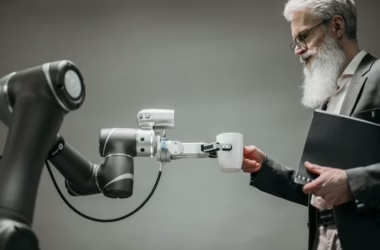

Major organizations worldwide have deployed over 1,300 real-world AI use cases as of April 2026, fundamentally reshaping how work gets done across industries. According to Google’s latest report, companies are rapidly moving from AI experimentation to full production deployment, with “agentic enterprises” now operating AI systems that handle complex workflows previously managed by human workers.
This massive adoption surge comes at a time when public sentiment toward AI remains deeply divided. While businesses embrace automation for efficiency gains, polling data shows growing resistance among workers, particularly Gen Z, who increasingly view AI as a threat to employment rather than a productivity tool.
The Scale of AI Workplace Integration
The numbers tell a striking story of rapid transformation. Google’s comprehensive analysis reveals that production AI and agentic systems are now deployed across virtually every major organization, representing what may be “the fastest technological transformation we’ve seen.”
These implementations go far beyond simple chatbots or basic automation. Companies are deploying sophisticated AI agents that can:
- Analyze multiple data sources simultaneously to generate comprehensive reports
- Automate complex decision-making processes that previously required human oversight
- Handle customer interactions with minimal human intervention
- Manage supply chain operations and predict market fluctuations
According to Microsoft’s partner ecosystem data, organizations are prioritizing “the highest value use cases” while building robust data and security foundations to run AI reliably in production environments.
The Human Cost: Growing Resistance to Automation
Despite corporate enthusiasm, worker sentiment tells a different story. Recent polling data highlighted by The Verge shows that AI now has worse favorability ratings than ICE among American workers, with nearly two-thirds of respondents having used AI tools like ChatGPT or Copilot in the past month.
This disconnect between usage and approval reveals a fundamental tension in the modern workplace. Workers are being asked to embrace tools that many perceive as direct threats to their job security. The polling shows that Gen Z workers are particularly skeptical, viewing AI adoption as automation that will ultimately replace human workers rather than augment their capabilities.
The resistance isn’t just emotional—it reflects real concerns about job displacement as companies implement increasingly sophisticated AI systems that can handle tasks previously requiring human expertise and judgment.
Real-World Applications Changing Job Functions
Companies like Canva demonstrate how AI integration is transforming traditional job roles. CEO Melanie Perkins recently explained how their platform now allows users to “simply tell Canva what to make” and have it automatically generate presentations and documents by pulling from various data sources including Slack and email.
This type of AI-powered automation is reshaping roles across industries:
Design and Creative Work
- Non-designers can now create professional-quality materials without traditional design skills
- AI handles routine design tasks, freeing professionals for strategic work
- Template creation and brand consistency become automated processes
Data Analysis and Reporting
- AI systems analyze multiple data streams simultaneously
- Automated report generation reduces need for manual data compilation
- Predictive analytics become accessible to non-technical staff
Customer Service and Support
- AI agents handle routine inquiries and troubleshooting
- Complex issues get escalated to human specialists
- 24/7 availability reduces staffing requirements
The Trust and Governance Challenge
As AI systems take on more responsibilities, companies face critical questions about oversight and accountability. Microsoft’s framework for “Frontier Transformation” emphasizes that successful AI deployment requires both intelligence and trust.
Organizations must balance automation benefits with proper governance:
- Identity and data protection systems to prevent unauthorized access
- Compliance monitoring to ensure AI decisions meet regulatory standards
- Performance tracking to measure AI effectiveness and catch errors
- Change management to help workers adapt to new AI-augmented roles
The challenge becomes more complex as companies move from simple AI tools to “agent-led processes” that can make autonomous decisions affecting business operations and customer relationships.
Skills Evolution in the AI Era
Rather than wholesale job replacement, many organizations are discovering that AI implementation requires workforce evolution. Workers need new skills to effectively collaborate with AI systems:
Technical Literacy
- Understanding how to prompt and direct AI systems effectively
- Knowing when to trust AI recommendations versus human judgment
- Basic data interpretation to validate AI outputs
Strategic Thinking
- Focus shifts from routine tasks to strategic planning and oversight
- Emphasis on creative problem-solving that AI cannot replicate
- Customer relationship management requiring emotional intelligence
AI Collaboration
- Learning to work alongside AI agents as team members
- Understanding AI limitations and potential failure modes
- Developing workflows that optimize human-AI collaboration
What This Means
The deployment of over 1,300 AI use cases across major organizations signals that workplace automation has moved beyond pilot programs into mainstream business operations. This transformation is happening faster than many workers and policymakers anticipated, creating a significant gap between corporate adoption and public acceptance.
For workers, the key insight is that AI integration appears inevitable across most industries. Rather than wholesale replacement, the evidence suggests a future where human workers collaborate with increasingly sophisticated AI systems. Success in this environment will depend on developing complementary skills that enhance rather than compete with AI capabilities.
For employers, the challenge extends beyond technical implementation to include change management, worker retraining, and maintaining public trust. Companies that fail to address worker concerns about job security and provide clear pathways for skill development may face increased resistance and potential backlash.
The regulatory landscape is also evolving, as evidenced by new restrictions on government employees using insider information in prediction markets—a sign that policymakers are beginning to grapple with the broader implications of AI-driven decision making in sensitive contexts.
FAQ
Q: Will AI replace most human jobs?
A: Current evidence suggests AI will transform rather than eliminate most jobs. While routine tasks become automated, new roles emerge requiring human creativity, strategic thinking, and AI collaboration skills.
Q: How can workers prepare for AI integration in their workplace?
A: Focus on developing skills that complement AI: strategic thinking, creative problem-solving, emotional intelligence, and technical literacy for working with AI systems effectively.
Q: Why do workers have negative feelings about AI despite using it regularly?
A: Polling shows people use AI tools for convenience while simultaneously worrying about job security and loss of human agency in decision-making processes.