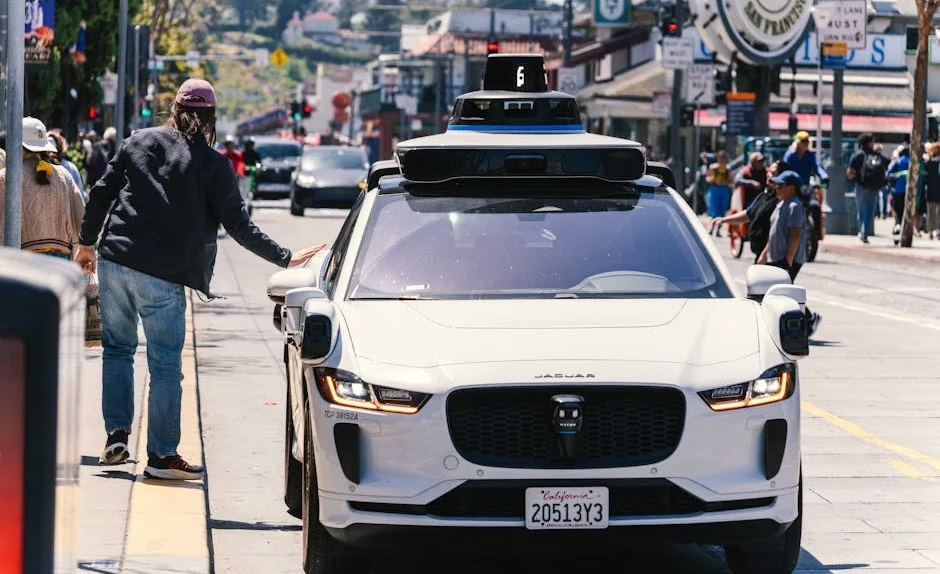

The automotive industry faces an unprecedented talent shortage as AI specialists command salaries between $300,000 and $500,000, according to TechCrunch Mobility. This escalating competition for autonomous vehicle expertise is reshaping enterprise technology strategies across automakers, forcing IT leaders to reconsider their AI implementation timelines and budget allocations.
The talent drain coincides with critical enterprise adoption challenges. A Lightrun survey reveals that 43% of AI-generated code changes require manual debugging in production environments, highlighting significant reliability concerns for enterprise automotive AI deployments.
Enterprise Talent Acquisition Crisis in Automotive AI
Defense technology startups are leading the poaching war, leveraging Department of Defense funding to offer premium compensation packages for automotive AI talent. According to industry sources, these companies specifically target professionals with hybrid skills combining classical robotics and AI expertise.
The ideal automotive AI candidate possesses deep understanding of hardware-software integration for autonomous systems, including experience with:
- Sensor fusion architectures for LIDAR, radar, and camera systems
- Real-time processing frameworks for safety-critical applications
- Edge computing deployment in constrained automotive environments
- Compliance frameworks for automotive safety standards (ISO 26262)
Enterprise automotive companies face a strategic dilemma: invest heavily in talent retention or risk project delays that could impact competitive positioning. Tesla and Waymo, as market leaders, set compensation benchmarks that smaller enterprises struggle to match.
This talent shortage directly impacts enterprise technology roadmaps, forcing CIOs to consider alternative strategies such as strategic partnerships, acquisition of AI startups, or increased reliance on third-party AI platforms.
Production Reliability Challenges for Enterprise AI Systems
The 2026 State of AI-Powered Engineering Report exposes critical reliability gaps in enterprise AI implementations. With 43% of AI-generated code requiring production debugging, automotive enterprises face significant operational risks.
Key enterprise concerns include:
- Zero single-cycle deployment success across surveyed organizations
- 88% requiring 2-3 redeploy cycles for AI-generated fixes
- 11% needing 4-6 cycles before achieving production stability
For automotive enterprises deploying ADAS (Advanced Driver Assistance Systems) or autonomous features, these reliability issues translate to substantial business risk. Safety-critical automotive systems demand higher reliability standards than typical enterprise software applications.
Enterprise IT leaders must implement robust testing frameworks and validation processes specifically designed for AI-generated automotive code. This includes establishing dedicated staging environments that closely mirror production vehicle conditions and implementing comprehensive regression testing suites.
Spec-Driven Development for Automotive AI at Scale
According to VentureBeat, enterprises are adopting spec-driven development methodologies to address AI reliability concerns. This approach requires AI agents to work from structured, context-rich specifications before generating any code.
For automotive enterprises, spec-driven development offers several advantages:
- Regulatory compliance alignment with automotive safety standards
- Traceability requirements for safety-critical system validation
- Integration consistency across multiple vehicle platforms
- Quality assurance frameworks for autonomous system verification
The Kiro IDE team demonstrated this approach’s effectiveness, reducing feature development cycles from two weeks to two days. An AWS engineering team completed an 18-month rearchitecture project with six people in 76 days using similar methodologies.
Enterprise automotive organizations should evaluate spec-driven development platforms that integrate with existing vehicle development toolchains and support automotive-specific compliance requirements.
Infrastructure and Resource Requirements
The Stanford AI Index reveals that AI data centers now consume 29.6 gigawatts globally, equivalent to New York state’s peak power demand. For automotive enterprises, this highlights significant infrastructure considerations for AI deployment.
Key enterprise infrastructure requirements include:
- Edge computing capabilities for real-time vehicle processing
- Cloud-to-edge orchestration for over-the-air updates
- Data pipeline architecture for continuous learning systems
- Cybersecurity frameworks for connected vehicle protection
The report also highlights supply chain vulnerabilities, with Taiwan’s TSMC fabricating most leading AI chips. Enterprise automotive companies must develop supply chain risk mitigation strategies, particularly for safety-critical AI components.
Water consumption presents another enterprise consideration, with OpenAI’s GPT-4o alone potentially exceeding the drinking water needs of 12 million people annually. Automotive enterprises deploying large-scale AI training operations must factor environmental sustainability into their technology strategies.
Competitive Landscape and Market Dynamics
The Stanford AI Index shows the US and China maintaining near-equal AI model performance, with significant implications for automotive enterprises. This competitive parity affects technology sourcing decisions and regulatory compliance strategies.
Tesla and Waymo continue leading autonomous vehicle development, but enterprise adoption patterns vary significantly:
- Tesla’s integrated approach appeals to enterprises seeking end-to-end control
- Waymo’s platform strategy attracts organizations preferring specialized partnerships
- Traditional automakers focus on incremental ADAS feature deployment
Enterprise decision-makers must evaluate vendor lock-in risks, interoperability requirements, and long-term technology roadmap alignment when selecting automotive AI partners.
What This Means
The automotive AI talent shortage represents a fundamental shift in enterprise technology strategy. Organizations can no longer rely solely on internal development capabilities and must consider hybrid approaches combining internal teams, strategic partnerships, and third-party platforms.
The reliability challenges identified in AI-generated code demand immediate attention from enterprise IT leaders. Implementing robust testing frameworks and validation processes becomes critical for safety-critical automotive applications.
Spec-driven development emerges as a promising solution for enterprise-scale automotive AI deployment, offering improved reliability and compliance alignment. However, successful implementation requires significant organizational change management and developer training investment.
FAQ
Q: What salary ranges should enterprises expect for automotive AI talent?
A: Base salaries now range from $300,000 to $500,000, not including equity and benefits, according to industry sources. Defense tech companies often offer premium compensation packages.
Q: How reliable is AI-generated code for automotive applications?
A: Current data shows 43% of AI-generated code requires production debugging, with zero organizations achieving single-cycle deployment success. This presents significant concerns for safety-critical automotive systems.
Q: What infrastructure investments are required for automotive AI deployment?
A: Enterprises need edge computing capabilities, cloud-to-edge orchestration, robust data pipelines, and comprehensive cybersecurity frameworks. Power consumption and supply chain resilience also require careful planning.
Further Reading
For the broader 2026 landscape across research, industry, and policy, see our State of AI 2026 reference.