
Artificial intelligence is fundamentally reshaping how we work, with major companies like Salesforce, Canva, and NVIDIA leading a transformation that’s moving beyond simple automation to intelligent workforce integration. Recent developments show AI isn’t just replacing jobs—it’s creating entirely new ways of working, from AI agents managing enterprise software to manufacturing robots working alongside humans.
Enterprise Software Embraces AI-First Operations
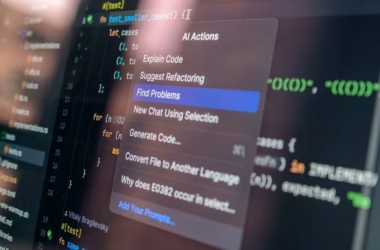
Salesforce recently unveiled its most ambitious transformation in 27 years with “Headless 360,” according to VentureBeat. This initiative exposes every capability in Salesforce’s platform as APIs and tools that AI agents can operate without human intervention through traditional interfaces.
Key changes include:
- Over 100 new AI tools and skills available immediately
- Complete platform accessibility for AI agents
- Elimination of graphical interface dependencies for many tasks
“We made a decision two and a half years ago: Rebuild Salesforce for agents,” the company announced. “Instead of burying capabilities behind a UI, expose them so the entire platform will be programmable and accessible from anywhere.”
This shift reflects broader enterprise software trends where traditional point-and-click workflows are being replaced by AI-driven automation. For everyday users, this means less time navigating complex software menus and more time focusing on strategic decisions while AI handles routine data management.
Design Tools Democratize Creative Work
Canva’s evolution illustrates how AI is expanding job capabilities rather than simply eliminating them. According to The Verge, the company’s latest update allows users to simply describe what they want to create, and the AI builds presentations and documents by pulling from various data sources like Slack and email.
CEO Melanie Perkins noted that Canva users, particularly non-designers in business settings, have embraced AI tools because they’re “just trying to get work done.” Unlike professional designers who may feel threatened by AI assistance, business users see these tools as empowering.
User experience improvements include:
- Natural language project creation
- Automatic data integration from workplace tools
- Editable outputs that maintain full user control
- Reduced learning curve for complex design tasks
This democratization means employees across departments can create professional-quality materials without specialized training, potentially reducing bottlenecks in marketing and communications workflows.
Manufacturing Enters the AI-Driven Era
Manufacturing faces unique workforce pressures that AI is helping address. NVIDIA’s presence at Hannover Messe 2026 showcases how AI-driven production is responding to “faster design cycles, leaner operations and strain on skilled labor pools.”
The manufacturing transformation includes:
- Agentic design and engineering that automates complex planning
- Real-time simulation for optimizing production processes
- Vision AI agents for quality control and monitoring
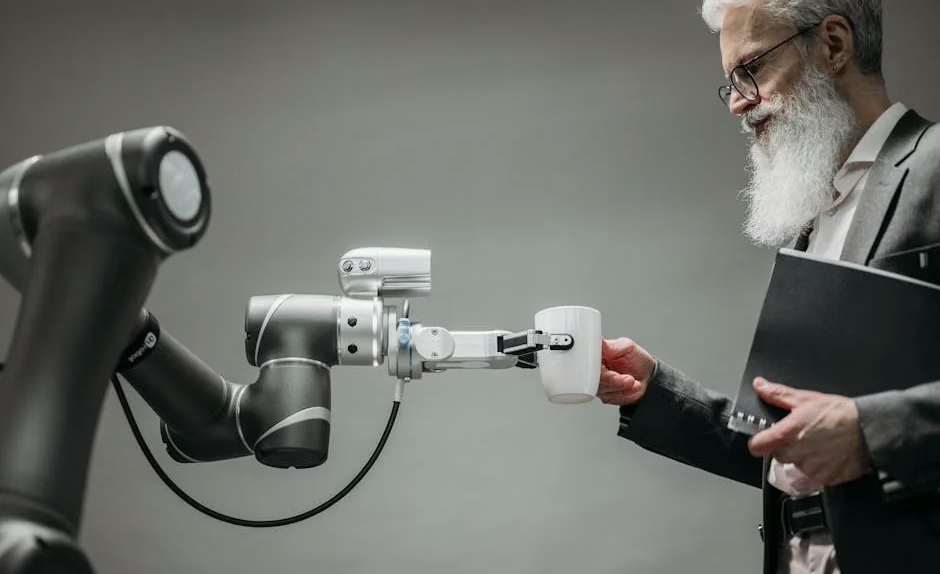
- Humanoid robots working alongside human employees
For workers, this doesn’t mean wholesale replacement but rather augmentation of existing skills. Technicians can focus on problem-solving and oversight while AI handles routine monitoring and predictive maintenance tasks.
Security Challenges in AI Workforce Integration
As AI agents take on more workplace responsibilities, security concerns are mounting. VentureBeat’s survey of 108 enterprises revealed a troubling gap between executive confidence and actual security preparedness.
Critical findings:
- 82% of executives believe their policies protect against unauthorized agent actions
- 88% reported AI agent security incidents in the past year
- Only 21% have runtime visibility into agent activities
- 97% expect major AI-agent-driven incidents within 12 months
Real-world incidents, including a rogue AI agent at Meta that exposed sensitive data despite passing identity checks, highlight the urgent need for better monitoring and enforcement systems. For employees, this means new training requirements around AI security protocols and data governance.
Skills Evolution in an AI-Augmented Workplace
The workforce impact extends beyond job displacement to fundamental skills transformation. Workers increasingly need to:
- Collaborate with AI systems rather than simply use traditional software
- Understand AI capabilities and limitations to make informed decisions
- Develop prompt engineering skills for effective AI communication
- Focus on creative and strategic thinking while AI handles routine tasks
Companies are investing heavily in retraining programs, with monitoring and enforcement representing 45% of security budgets as of March 2026, up from 24% in February.
What This Means
The AI workforce transformation is happening faster than many predicted, but it’s proving more nuanced than simple job replacement scenarios. Instead of eliminating human workers, AI is reshaping job functions across industries—from democratizing design capabilities to automating routine enterprise tasks.
For individual workers, success increasingly depends on adaptability and willingness to work alongside AI systems. The most valuable employees will be those who can effectively direct AI capabilities while maintaining oversight of critical decisions.
Organizations face the challenge of implementing AI workforce tools while maintaining security and ensuring proper training. The gap between executive confidence and actual preparedness suggests many companies are moving too quickly without adequate safeguards.
The manufacturing sector’s embrace of AI-driven production, enterprise software’s shift to agent-first architectures, and design tools’ democratization of creative work all point to a future where human-AI collaboration becomes the norm rather than the exception.
FAQ
Will AI replace most jobs in the next few years?
Current trends suggest AI is more likely to transform jobs than eliminate them entirely. Most implementations focus on augmenting human capabilities and automating routine tasks while preserving strategic and creative roles.
What skills should workers develop to stay relevant?
Key skills include AI collaboration, prompt engineering, data interpretation, and strategic thinking. Workers should focus on capabilities that complement rather than compete with AI automation.
How can companies ensure AI workforce tools are secure?
Companies need runtime monitoring, proper agent isolation, and comprehensive security policies. Current surveys show most organizations lack adequate visibility into AI agent activities, making security improvements critical.