
The automotive industry is experiencing unprecedented upheaval as artificial intelligence reshapes everything from manufacturing to autonomous driving, creating fierce competition for specialized talent and forcing traditional automakers to make difficult strategic decisions.
Self-Driving Talent Commands Premium Salaries
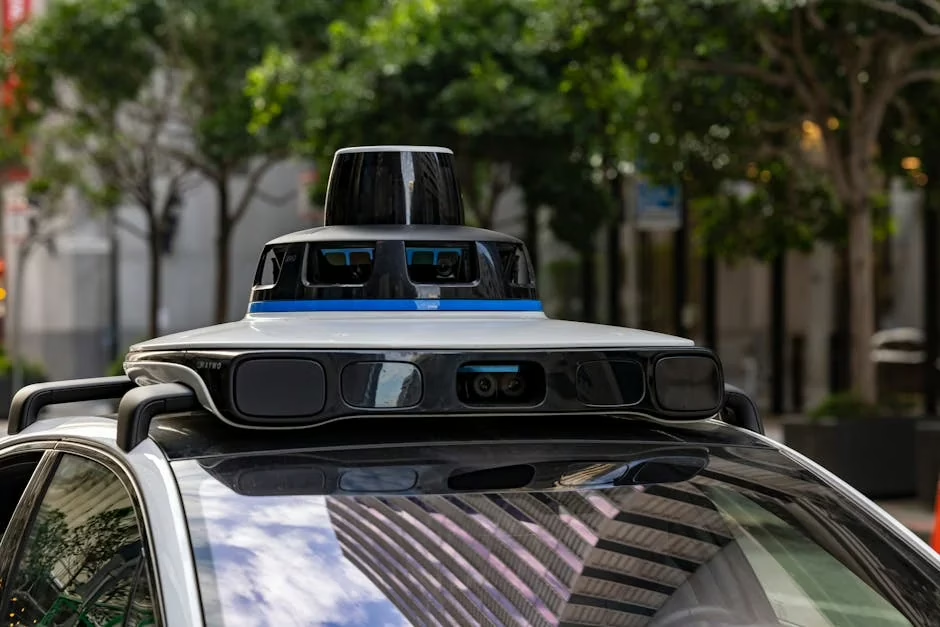
The competition for autonomous vehicle expertise has reached new heights, with base salaries for self-driving car engineers now ranging between $300,000 and $500,000, excluding equity and other benefits. This represents a significant escalation from what one industry founder described seven years ago as a “knife fight” for talent against companies like Waymo.
The current talent wars reflect the critical importance of AI expertise in automotive development, as companies race to develop and deploy autonomous driving technologies. The premium salaries underscore how scarce and valuable these specialized skills have become in an industry where AI capabilities can determine competitive advantage.
Legacy Automakers Struggle with EV Transition
While the talent wars rage on, some traditional automakers are making strategic retreats. Honda recently announced the cancellation of its electric vehicle programs, including the electric Acura RDX and Honda 0 sedan and SUV models. The company cited U.S. tariffs and Chinese competition as factors, but industry observers note that Honda never developed a truly viable EV strategy.
This withdrawal highlights the challenges facing legacy automakers as they attempt to compete in an increasingly AI-driven automotive landscape. The decision effectively eliminates Honda’s chances of surviving the current wave of industry disruption, particularly as electric vehicles become more integrated with advanced AI systems.
Manufacturing Embraces Physical AI
Beyond autonomous vehicles, AI is transforming automotive manufacturing itself. The industry is moving toward “physical AI” – intelligent systems that can operate reliably in real-world manufacturing environments. This represents an evolution from traditional automation to more sophisticated AI-driven processes that can adapt to complex, dynamic production scenarios.
Manufacturing leaders are recognizing that isolated AI tools and individual robots are no longer sufficient. Instead, they’re pursuing integrated intelligence systems that can handle labor constraints, rising complexity, and the pressure to innovate faster while maintaining safety and quality standards.
Enterprise AI Deployment Challenges
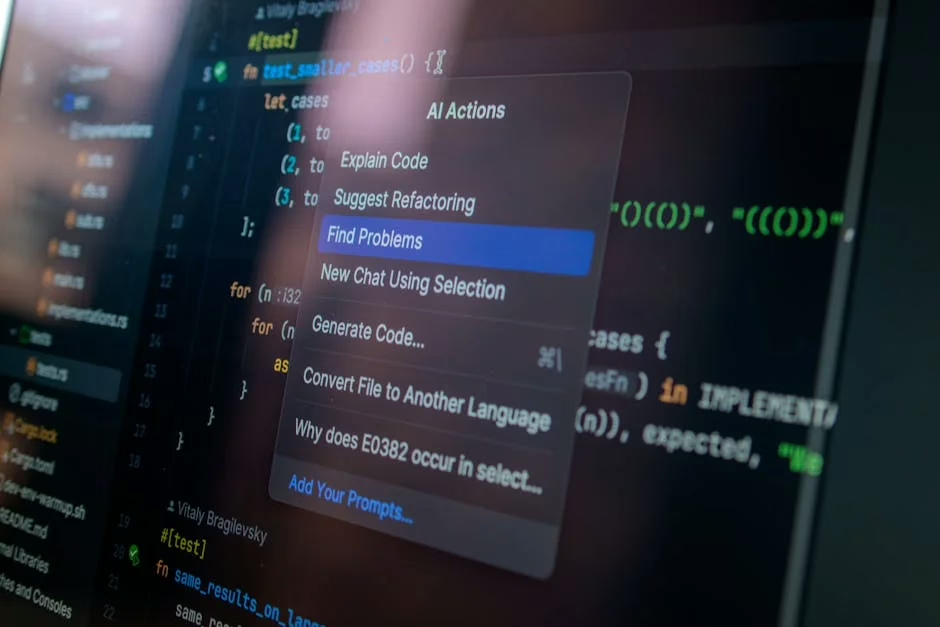
As AI becomes more critical to automotive operations, companies are grappling with safe deployment strategies. New partnerships, such as the collaboration between NanoClaw and Docker, are addressing enterprise concerns about giving AI agents operational freedom without risking system damage. These sandbox environments allow AI agents to function safely within controlled parameters – a crucial consideration for automotive manufacturers implementing AI across their operations.
Industry Outlook
The automotive sector’s AI transformation is creating winners and losers. Companies that can attract top talent and develop comprehensive AI strategies are positioning themselves for future success, while those that retreat from key technologies like electric vehicles may find themselves increasingly marginalized.
The talent premium for AI expertise shows no signs of decreasing, suggesting that the competition for skilled professionals will continue to intensify. As the industry moves toward more integrated AI systems across all aspects of automotive development and manufacturing, the companies that can successfully navigate these talent wars and technology transitions will likely emerge as the dominant players in the next generation of automotive innovation.
For the broader 2026 landscape across research, industry, and policy, see our State of AI 2026 reference.