
Healthcare AI is expanding beyond diagnostics and drug discovery into administrative automation and novel treatment approaches, with startups securing major funding to address systemic inefficiencies and develop AI-powered therapeutic solutions. Recent developments span from venture-backed administrative AI tools to Gates Foundation-funded synthetic microbiome treatments using machine learning.
Administrative AI Tackles Healthcare’s Fax Machine Problem
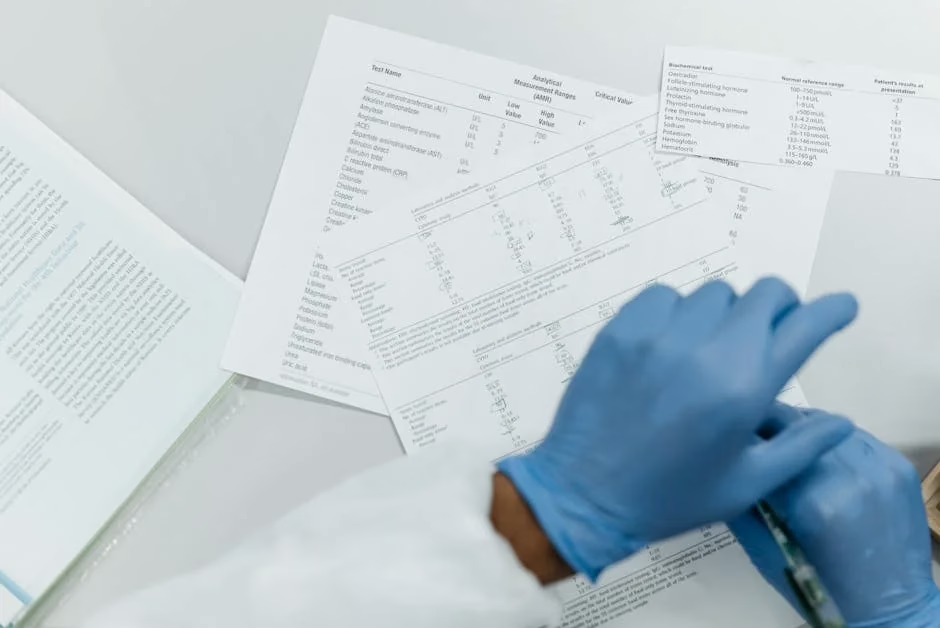
Basata, a Phoenix-based startup founded by former Lyft and Cruise executive Kaled Alhanafi and ex-Medtronic engineer Chetan Patel, is targeting healthcare’s administrative bottleneck with AI-powered referral processing. According to TechCrunch, specialty practices frequently process hundreds or thousands of referral documents — most arriving by fax — with small administrative teams, creating massive patient care delays.
The company addresses what Alhanafi calls a “care gap” where patients lose access not due to doctor shortages, but administrative backlogs. In Alhanafi’s experience with his father’s carotid artery diagnosis, only one of three cardiology referrals responded within weeks, while another didn’t call back until after surgery was completed.
Basata’s AI solution automates the intake process that currently relies on manual fax processing, potentially reducing specialist appointment delays that affect millions of patients annually. The startup has attracted significant venture capital interest as investors recognize administrative inefficiency as a major healthcare AI opportunity beyond traditional diagnostic applications.
Machine Learning Powers Synthetic Microbiome Development
Kanvas Biosciences received new funding from the Bill & Melinda Gates Foundation to develop AI-driven treatments for environmental enteric dysfunction (EED), a disease affecting 150 million children worldwide in regions with poor sanitation. According to Forbes, CEO Matthew Cheng’s team uses machine learning and spatial imagery to create what he calls a “Google Maps” for the microbiome.
The company’s AI technology enables 145 different bacterial strains in a single pill, compared to existing microbiome treatments containing fewer than a dozen strains. Since founding in 2020, Kanvas has built machine learning systems that identify promising gut bacteria strains capable of working in concert within bioreactors.
EED causes severe gut inflammation preventing nutrient absorption, typically resulting from chronic infections by bacteria like E. coli that damage gut lining. Traditional treatments show limited effectiveness, making Kanvas’s AI-designed synthetic microbiome approach a potentially breakthrough intervention for childhood malnutrition in developing regions.
Advanced Medical Technologies Enter Clinical Practice
Focused ultrasound treatments for Parkinson’s disease represent emerging AI-assisted therapeutic approaches gaining clinical adoption. Rebecca King Crews, wife of actor Terry Crews, recently underwent focused ultrasound treatment for Parkinson’s disease symptoms after over a decade with the condition, according to Forbes.
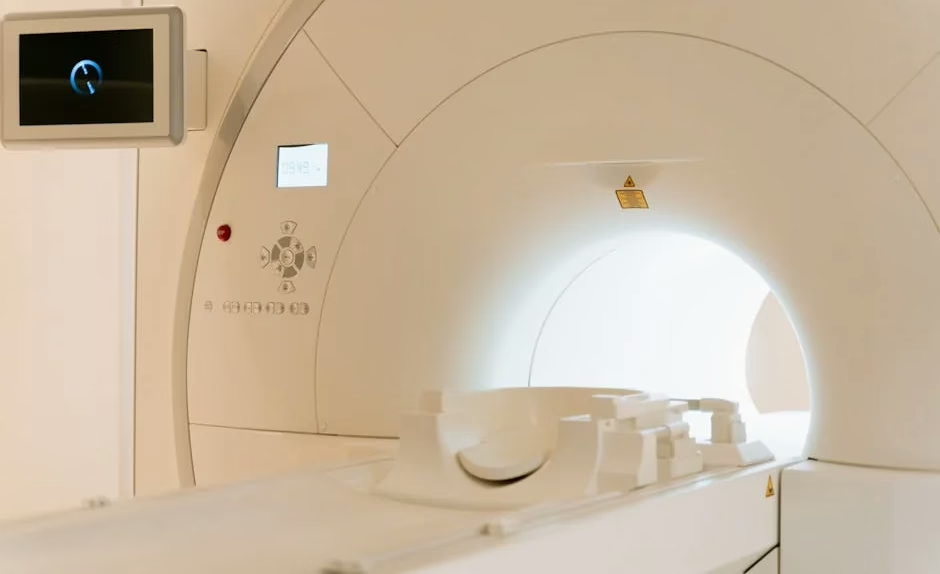
The treatment uses precisely targeted ultrasound waves guided by real-time imaging to treat brain tissue without invasive surgery. While not explicitly AI-powered in the coverage, focused ultrasound systems increasingly incorporate machine learning for treatment planning and real-time guidance during procedures.
Rebecca’s experience highlights how advanced medical technologies are transitioning from experimental to accessible treatments. She was diagnosed with Parkinson’s in 2015 and experienced particularly challenging symptoms last July before pursuing the focused ultrasound option that Terry researched and recommended.
Healthcare Technology Infrastructure Challenges
The persistence of fax machines in healthcare administration illustrates broader technology adoption challenges that AI solutions must navigate. Despite advanced diagnostic AI and sophisticated treatment technologies, basic administrative processes remain manual and error-prone across much of the healthcare system.
Venture capitalists are increasingly targeting healthcare’s “invisible” administrative layers rather than just patient-facing diagnostic tools. This shift recognizes that AI’s healthcare impact depends as much on operational efficiency as clinical accuracy.
Specialty practices losing patients due to intake backlogs rather than capacity constraints represents a systemic inefficiency that administrative AI can address immediately, potentially improving patient access without requiring additional medical professionals or facilities.
What This Means
Healthcare AI is maturing beyond headline-grabbing diagnostic applications toward practical solutions addressing systemic inefficiencies and novel therapeutic approaches. The combination of venture funding for administrative AI and foundation support for AI-designed treatments indicates growing recognition that healthcare transformation requires both operational and clinical innovation.
The success of companies like Basata and Kanvas Biosciences suggests healthcare AI’s next phase will focus on scalable solutions addressing specific pain points rather than broad technological capabilities. Administrative automation may deliver more immediate patient impact than advanced diagnostic AI by simply ensuring patients can access existing care.
For healthcare organizations, this trend indicates AI investment should balance cutting-edge clinical applications with foundational operational improvements. The persistence of fax-based workflows alongside advanced medical technologies highlights implementation gaps that practical AI solutions can address while more sophisticated clinical AI continues developing.
FAQ
How is AI being used beyond medical diagnosis in healthcare?
AI is increasingly targeting healthcare administration, with startups like Basata using automation to process referrals and reduce specialist appointment delays. Additionally, companies like Kanvas Biosciences use machine learning to design synthetic microbiome treatments for diseases affecting millions globally.
What makes synthetic microbiome treatments different from traditional approaches?
Kanvas Biosciences’ AI-designed treatments can include 145 different bacterial strains in a single pill, compared to existing microbiome therapies with fewer than a dozen strains. Their machine learning system identifies bacterial combinations that work together effectively, potentially treating diseases like environmental enteric dysfunction that lack approved medications.
Why are venture capitalists investing in healthcare administrative AI?
Administrative inefficiencies create significant patient access barriers, with specialty practices losing patients due to referral processing backlogs rather than capacity constraints. AI solutions addressing these operational challenges can improve patient care immediately without requiring additional medical professionals or complex clinical validation processes.