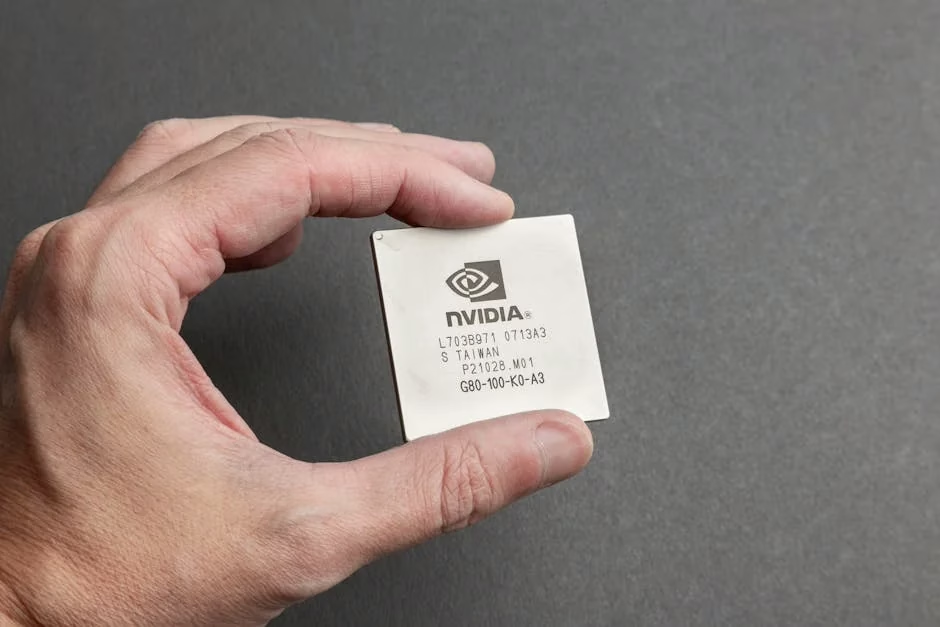

NVIDIA and AMD face significant delays in obtaining approval for AI chip exports to China as the Bureau of Industry and Security grapples with a 20% staff turnover that has created administrative bottlenecks. According to Tom’s Hardware, this regulatory gridlock raises critical questions about the balance between national security and technological accessibility.
The delays come as analysts project NVIDIA could potentially reach a $22 trillion valuation, making it the world’s most valuable company. However, this astronomical growth trajectory depends heavily on global market access and the company’s ability to navigate increasingly complex geopolitical tensions surrounding AI technology exports.
Ethical Implications of AI Hardware Distribution
The export restrictions on NVIDIA’s advanced AI chips, including the H100 and upcoming H200 models, highlight fundamental ethical questions about technological equity and global access to artificial intelligence capabilities. When governments limit access to cutting-edge AI hardware, they create digital divides that can exacerbate existing inequalities between nations and communities.
Key ethical considerations include:
- Technological sovereignty: Nations’ right to develop their own AI capabilities
- Innovation barriers: How export controls may stifle collaborative research
- Economic justice: Ensuring AI benefits aren’t concentrated in select regions
- Research freedom: Balancing security concerns with academic collaboration
The current bottleneck at the Bureau of Industry and Security demonstrates how bureaucratic inefficiencies can inadvertently become policy decisions, affecting global AI development patterns without deliberate democratic oversight.
Regulatory Framework Challenges and Accountability
The 20% staff turnover at the Bureau of Industry and Security reveals deeper systemic issues in how governments regulate emerging technologies. This administrative chaos raises questions about institutional capacity to make informed decisions about complex AI hardware exports.
Critical regulatory gaps include:
- Expertise shortage: Insufficient technical knowledge among regulatory staff
- Process transparency: Lack of clear criteria for export approval decisions
- Stakeholder engagement: Limited input from affected communities and researchers
- Accountability mechanisms: Unclear responsibility for delayed decisions
These regulatory challenges extend beyond NVIDIA to affect the entire AI ecosystem. When approval processes lack transparency and consistency, they create uncertainty that can discourage innovation and investment in AI safety research. The delays particularly impact academic institutions and smaller companies that lack the resources to navigate complex bureaucratic processes.
Societal Impact of AI Hardware Concentration
NVIDIA’s market dominance in AI hardware creates concerning concentrations of power that extend far beyond financial markets. The company’s chips power everything from medical research to autonomous vehicles, making access to these technologies a matter of societal importance.
Broader societal implications include:
- Healthcare equity: AI-powered medical research depends on access to advanced chips
- Educational access: Universities need these chips for AI research and training
- Small business innovation: Startups require affordable AI infrastructure
- Democratic participation: Citizens need AI literacy tools powered by accessible hardware
The current export delays disproportionately affect researchers and institutions in affected regions, potentially slowing progress on AI safety research, climate modeling, and other socially beneficial applications. This creates a paradox where security measures intended to protect society may actually hinder research that could benefit humanity.
Fairness and Bias in AI Hardware Policy
Export control policies for AI hardware often reflect geopolitical biases rather than objective assessments of technology risks. The current system tends to favor established allies while restricting access for other nations, regardless of their intended use cases or research contributions.
Fairness concerns include:
- Discriminatory application: Policies that target specific countries rather than use cases
- Research collaboration barriers: Restrictions that prevent international scientific cooperation
- Innovation inequality: Uneven access that advantages certain regions
- Transparency deficits: Lack of clear, publicly available criteria for decisions
These biases become embedded in global AI development patterns, potentially creating long-term geopolitical tensions and hindering collaborative solutions to global challenges like climate change and pandemic response.
Future Policy Considerations and Recommendations
Addressing the current regulatory bottlenecks requires comprehensive reform that balances security concerns with ethical obligations to promote beneficial AI development globally.
Policy recommendations include:
- Capacity building: Investing in technical expertise within regulatory agencies
- Multi-stakeholder governance: Including diverse voices in policy development
- Use-case based evaluation: Focusing on intended applications rather than geographic restrictions
- International cooperation: Developing multilateral frameworks for AI governance
Governments must also consider the long-term implications of creating technological barriers that could fragment global AI research communities. The goal should be promoting responsible AI development while maintaining the collaborative spirit essential for addressing shared human challenges.
What This Means
The current delays in NVIDIA AI chip exports represent more than administrative inefficiency—they highlight fundamental tensions between national security and global technological equity. As AI becomes increasingly central to economic competitiveness and social progress, these decisions about hardware access become decisions about who gets to participate in shaping humanity’s technological future.
The concentration of AI capabilities in the hands of a few companies and nations raises questions about democratic governance of transformative technologies. Moving forward, policymakers must develop more nuanced approaches that protect legitimate security interests while preserving the collaborative, open nature of scientific research that has driven AI progress.
Ultimately, the way we handle AI hardware distribution today will shape global power dynamics and technological equity for decades to come. The stakes are too high for these decisions to be made through bureaucratic drift or geopolitical posturing alone.
FAQ
Q: Why are NVIDIA chip exports to China being delayed?
A: The Bureau of Industry and Security is experiencing a 20% staff turnover, creating administrative bottlenecks that prevent timely processing of export license applications for advanced AI chips.
Q: How do these export restrictions affect AI research globally?
A: Restrictions limit international collaboration, create unequal access to research tools, and may slow progress on beneficial AI applications like medical research and climate modeling.
Q: What are the main ethical concerns about AI hardware export controls?
A: Key concerns include technological equity, research freedom, democratic participation in AI development, and ensuring AI benefits reach all communities rather than being concentrated in select regions.
Related news
- HP M&A Rumors With Nvidia Refocus Attention On AI PC Story – Yahoo Finance – Google News – NVIDIA
- Nvidia GeForce Now is finally launching in India on April 16 – The Times of India – Google News – NVIDIA
- Nvidia’s Stephen Jones on the toolkit powering GPUs: ‘A wild ride’ – Computerworld – Google News – NVIDIA
Sources
- Here are Monday’s biggest analyst calls: Nvidia, Apple, Tesla, CoreWeave, Blackstone, Starbucks, Netflix & more – CNBC – Google News – NVIDIA
- Approvals for Nvidia and AMD AI chip exports to China stall under government bottleneck — 20% staff turnover hobbles Bureau of Industry and Security – Tom’s Hardware – Google News – NVIDIA
For the broader 2026 landscape across research, industry, and policy, see our State of AI 2026 reference.