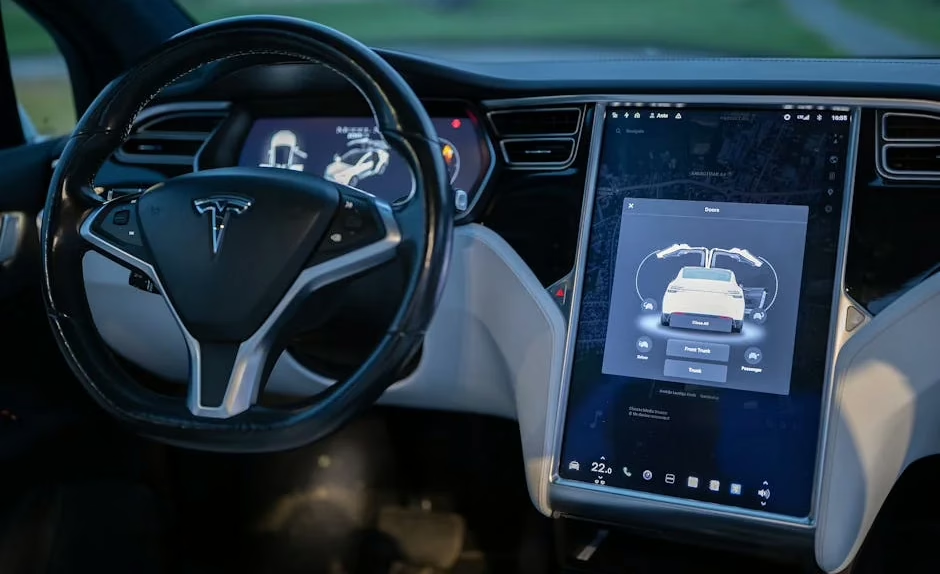

Tesla’s Full Self-Driving (Supervised) subscriptions reached 1.28 million active users in Q1 2024, representing a 51% year-over-year growth that signals accelerating enterprise adoption of autonomous vehicle technologies. According to TechCrunch, Tesla’s automotive revenue rose to $16.2 billion, driven partly by increased FSD subscription uptake alongside traditional vehicle sales.
This milestone coincides with broader enterprise AI agent deployment across industries, as organizations increasingly integrate autonomous systems into their operational workflows. The convergence of autonomous vehicle technology with enterprise AI infrastructure represents a critical inflection point for IT decision-makers evaluating scalable transportation solutions.
Enterprise Autonomous Vehicle Market Dynamics
The enterprise autonomous vehicle sector is experiencing unprecedented investment flows, with companies like Uber committing over $10 billion to autonomous vehicle acquisitions and equity stakes. According to TechCrunch Mobility, approximately $2.5 billion represents direct investments, while $7.5 billion is allocated for robotaxi fleet purchases over the coming years.
This asset-heavy approach marks a strategic shift from Uber’s previous technology development model. Rather than building autonomous capabilities in-house, enterprises are increasingly adopting partnership-based procurement strategies that reduce capital expenditure while accelerating deployment timelines.
Key enterprise adoption drivers include:
- Operational cost reduction through fleet optimization and reduced driver requirements
- Scalability advantages via subscription-based autonomous features
- Risk mitigation through vendor partnerships rather than internal R&D investments
- Regulatory compliance support from established autonomous vehicle providers
Advanced Driver Assistance Systems (ADAS) Integration Architecture
Enterprise ADAS implementations require robust technical architectures that support real-time data processing, edge computing capabilities, and seamless integration with existing fleet management systems. Tesla’s FSD architecture demonstrates how subscription-based autonomous features can scale across enterprise vehicle fleets without requiring significant infrastructure overhauls.
Modern ADAS platforms leverage cloud-native architectures that enable continuous software updates, performance monitoring, and predictive maintenance capabilities. These systems typically integrate with enterprise resource planning (ERP) platforms, providing IT leaders with centralized visibility into fleet operations and autonomous system performance metrics.
Critical technical considerations include:
- Data sovereignty requirements for sensitive operational information
- Network latency optimization for real-time decision-making
- Cybersecurity frameworks protecting autonomous vehicle communications
- Interoperability standards ensuring compatibility across vehicle manufacturers
Waymo and Enterprise Autonomous Deployment Models
Waymo’s enterprise-focused autonomous vehicle deployments illustrate how organizations can implement scalable robotaxi solutions without direct vehicle ownership. This Infrastructure-as-a-Service (IaaS) model enables enterprises to access autonomous transportation capabilities while maintaining operational flexibility and cost predictability.
Enterprise customers benefit from Waymo’s proven safety record and regulatory compliance frameworks, reducing the administrative burden associated with autonomous vehicle deployment. The platform’s API-driven integration capabilities support seamless connection with existing enterprise mobility management systems.
Enterprise deployment advantages:
- Predictable operational expenses through service-based pricing models
- Reduced liability exposure via vendor-managed safety and compliance
- Faster time-to-market compared to internal autonomous vehicle development
- Geographic scalability leveraging Waymo’s expanding operational territories
AI Agent Integration in Automotive Enterprise Systems
The integration of AI agents within automotive enterprise systems extends beyond vehicle autonomy to encompass comprehensive workflow automation. Google’s Deep Research Max demonstrates how autonomous research agents can support automotive industry decision-making through real-time market analysis and competitive intelligence gathering.
These agentic systems enable automotive enterprises to process vast datasets from vehicle sensors, traffic patterns, and operational metrics to optimize fleet performance and predict maintenance requirements. The combination of autonomous vehicles and AI agents creates comprehensive enterprise solutions that address both transportation and analytical needs.
https://www.youtube.com/watch?v=CfYx8FF26u8
AI agent applications in automotive enterprises:
- Predictive maintenance scheduling based on vehicle sensor data analysis
- Route optimization using real-time traffic and weather condition processing
- Fleet utilization analysis for capacity planning and resource allocation
- Regulatory compliance monitoring across multiple jurisdictions
Security and Compliance Frameworks for Autonomous Fleets
Enterprise autonomous vehicle deployments require comprehensive security frameworks addressing both cybersecurity threats and regulatory compliance requirements. IT decision-makers must evaluate vendors’ security architectures, including encryption protocols, intrusion detection systems, and incident response capabilities.
Compliance considerations vary significantly across industries and geographic regions, with healthcare, financial services, and government sectors requiring additional security controls. Autonomous vehicle providers must demonstrate adherence to industry-specific standards while maintaining operational efficiency and cost-effectiveness.
Essential security requirements:
- End-to-end encryption for all vehicle-to-cloud communications
- Multi-factor authentication for fleet management system access
- Regular security audits and penetration testing protocols
- Data retention policies compliant with regional privacy regulations
Cost-Benefit Analysis for Enterprise Autonomous Vehicle Adoption
Enterprise autonomous vehicle adoption requires comprehensive total cost of ownership (TCO) analysis encompassing initial deployment costs, ongoing operational expenses, and potential productivity gains. Tesla’s subscription model provides enterprises with predictable monthly expenses while eliminating large upfront capital investments.
Organizations must evaluate autonomous vehicle ROI across multiple dimensions, including reduced labor costs, improved safety records, enhanced operational efficiency, and potential insurance premium reductions. The subscription-based approach enables enterprises to scale autonomous capabilities gradually while monitoring performance metrics and cost impacts.
TCO considerations include:
- Subscription fees for autonomous driving capabilities
- Infrastructure upgrades required for fleet management integration
- Training costs for operational staff and IT administrators
- Insurance adjustments reflecting autonomous vehicle safety profiles
What This Means
Tesla’s FSD subscription growth to 1.28 million users represents a maturation of enterprise autonomous vehicle adoption, moving beyond pilot programs to production-scale deployments. This trend indicates that organizations are increasingly comfortable with subscription-based autonomous capabilities rather than pursuing expensive internal development initiatives.
For IT decision-makers, the convergence of autonomous vehicles with AI agent technologies creates opportunities to implement comprehensive enterprise mobility solutions that address both transportation and operational intelligence requirements. The key is selecting vendors with proven security frameworks, regulatory compliance capabilities, and scalable integration architectures.
The shift toward partnership-based autonomous vehicle procurement, exemplified by Uber’s $10 billion investment strategy, suggests that enterprises should prioritize vendor ecosystem evaluation over internal capability development. This approach reduces risk while accelerating time-to-value for autonomous transportation initiatives.
FAQ
Q: What are the primary security concerns with enterprise autonomous vehicle deployments?
A: Key security concerns include vehicle-to-cloud communication encryption, fleet management system access controls, and compliance with industry-specific data protection regulations. Organizations should prioritize vendors with comprehensive cybersecurity frameworks and regular third-party security audits.
Q: How do subscription-based autonomous driving features compare to traditional fleet ownership models?
A: Subscription models offer predictable operational expenses, reduced capital investment requirements, and continuous software updates. However, organizations should evaluate long-term costs and ensure subscription terms align with fleet utilization patterns and operational requirements.
Q: What integration capabilities are essential for enterprise autonomous vehicle platforms?
A: Essential integrations include ERP system connectivity, fleet management platform APIs, real-time monitoring dashboards, and compliance reporting tools. Organizations should prioritize vendors offering standardized APIs and proven enterprise system integration experience.