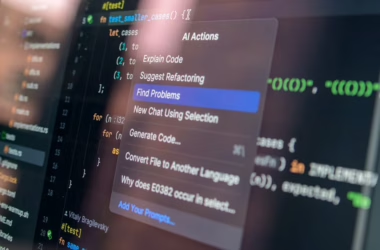

Microsoft CEO Satya Nadella is reportedly leading a comprehensive overhaul of Copilot, the company’s flagship AI assistant, as part of a broader strategic initiative to strengthen Microsoft’s position in enterprise AI markets. The initiative, internally dubbed “Code Red,” reflects Microsoft’s commitment to addressing enterprise feedback and competitive pressures in the rapidly evolving AI landscape.
This restructuring comes as Microsoft continues to see strong performance in its cloud and AI segments, with the company’s stock showing resilience amid broader tech sector volatility. The overhaul represents a critical inflection point for Microsoft’s AI strategy, particularly as enterprise customers increasingly demand more sophisticated, integrated AI solutions.
Enterprise Integration Challenges Drive Copilot Restructuring
The Copilot overhaul addresses several key enterprise pain points that have emerged since the platform’s initial deployment. Enterprise customers have reported integration complexities when attempting to deploy Copilot across diverse organizational workflows and legacy systems.
Microsoft’s decision to restructure Copilot reflects the company’s recognition that enterprise AI adoption requires more than just powerful language models. Organizations need seamless integration with existing enterprise software stacks, robust security frameworks, and scalable deployment models that can accommodate complex organizational hierarchies.
The restructuring focuses on three critical areas: improved Office 365 integration, enhanced Azure AI services connectivity, and streamlined deployment processes for large-scale enterprise implementations. These improvements are designed to reduce the total cost of ownership while improving user adoption rates across enterprise environments.
Additionally, Microsoft is addressing feedback regarding Copilot’s performance in specialized industry contexts, where generic AI responses often fall short of enterprise requirements for accuracy and domain-specific knowledge.
Azure AI Platform Expansion and Architecture Enhancements
Microsoft’s broader AI investment strategy extends well beyond Copilot improvements to encompass significant enhancements to the Azure AI platform. The company is expanding its AI infrastructure to support more demanding enterprise workloads and provide greater flexibility for custom AI model deployment.
Azure AI’s new architectural improvements include enhanced model hosting capabilities, improved data pipeline management, and more sophisticated monitoring and governance tools. These enhancements are particularly important for enterprises operating in regulated industries where AI model transparency and auditability are critical requirements.
The platform expansion includes new hybrid deployment options that allow organizations to maintain sensitive data on-premises while leveraging cloud-based AI processing capabilities. This hybrid approach addresses common enterprise concerns about data sovereignty and compliance requirements.
Microsoft is also investing heavily in edge AI capabilities, enabling organizations to deploy AI models closer to data sources for reduced latency and improved performance. This is particularly valuable for manufacturing, healthcare, and financial services organizations that require real-time AI processing capabilities.
GitHub Copilot and Developer Productivity Initiatives
The overhaul extends to GitHub Copilot, where Microsoft is implementing significant improvements to address enterprise developer workflow requirements. Enhanced code security scanning and improved integration with enterprise development environments are key focus areas.
GitHub Copilot’s enterprise features now include more sophisticated code review capabilities, better integration with existing CI/CD pipelines, and enhanced support for enterprise coding standards and compliance requirements. These improvements are designed to address IT decision-maker concerns about code quality and security in AI-assisted development environments.
Microsoft is also expanding GitHub Copilot’s language support and improving its ability to work with proprietary enterprise frameworks and libraries. This expansion is critical for large organizations with complex, custom-built software ecosystems.
The company is implementing new usage analytics and governance tools that provide IT leaders with better visibility into how developers are using AI assistance tools and their impact on productivity and code quality metrics.
Bing Enterprise Search and Knowledge Management
Microsoft’s AI investments include significant enhancements to Bing’s enterprise search capabilities, positioning it as a comprehensive knowledge management solution for large organizations. Bing Chat Enterprise now offers improved integration with Microsoft 365 applications and enhanced security features for handling sensitive corporate information.
The enterprise search platform includes new capabilities for indexing and searching across diverse enterprise data sources, including SharePoint, Teams, and third-party applications. This unified search experience is designed to improve employee productivity by providing AI-powered insights across organizational knowledge bases.
Security enhancements include advanced data loss prevention features and improved access controls that ensure sensitive information remains protected while enabling AI-powered search and discovery capabilities.
Microsoft is also implementing new analytics capabilities that help organizations understand how employees interact with enterprise knowledge systems and identify opportunities for improving information accessibility and workflow efficiency.
Cost Optimization and ROI Considerations
Enterprise AI adoption requires careful consideration of cost structures and return on investment metrics. Microsoft’s Copilot overhaul includes new pricing models and cost optimization tools designed to help organizations better manage AI-related expenses.
The company is implementing more granular usage tracking and billing capabilities that allow organizations to allocate AI costs across different departments and projects. This improved cost visibility is essential for IT leaders who need to demonstrate clear ROI from AI investments.
Microsoft is also offering new enterprise licensing options that provide more predictable pricing for large-scale deployments. These options include volume discounts and multi-year agreements that can significantly reduce per-user costs for organizations with substantial AI adoption plans.
The cost optimization initiatives include improved resource management capabilities that automatically scale AI processing resources based on actual usage patterns, helping organizations avoid over-provisioning while ensuring adequate performance during peak usage periods.
What This Means
Microsoft’s comprehensive Copilot overhaul represents a strategic pivot toward addressing real-world enterprise AI deployment challenges. The initiative demonstrates the company’s commitment to moving beyond proof-of-concept implementations toward production-ready AI solutions that can scale across large organizations.
For IT decision-makers, these improvements address critical concerns about integration complexity, security, and cost management that have historically slowed enterprise AI adoption. The enhanced Azure AI platform capabilities provide more flexibility for custom AI implementations while maintaining the reliability and compliance features that enterprise customers require.
The success of this overhaul will likely determine Microsoft’s competitive position in the enterprise AI market, particularly as organizations increasingly view AI capabilities as essential rather than experimental. The company’s ability to deliver on these improvements while maintaining its current market momentum will be crucial for sustaining its AI leadership position.
FAQ
What are the main benefits of Microsoft’s Copilot overhaul for enterprises?
The overhaul focuses on improved Office 365 integration, enhanced security features, better cost management tools, and streamlined deployment processes that reduce complexity for large-scale enterprise implementations.
How do the Azure AI platform enhancements affect existing enterprise deployments?
The enhancements provide backward compatibility while adding new hybrid deployment options, improved monitoring capabilities, and enhanced governance tools that help organizations better manage their AI implementations.
What timeline should enterprises expect for these Copilot improvements?
While Microsoft hasn’t provided specific timelines, the “Code Red” designation suggests these are high-priority initiatives likely to be rolled out progressively throughout 2024, with major enterprise features expected in the first half of the year.