
OpenAI launched ChatGPT Work on Thursday, July 10, 2026 — an autonomous AI agent built on GPT-5.6 that connects to email, Slack, calendars, and code repositories to complete multi-step work tasks independently. The same week, Proton unveiled Lumo, a privacy-first AI assistant bundled with its encrypted productivity suite, while Even Realities shipped its G2 smart glasses targeting meeting-heavy professionals. Across enterprise software, the push to embed AI into daily work is accelerating on multiple fronts.
ChatGPT Work Turns OpenAI’s Chatbot Into an Autonomous Agent
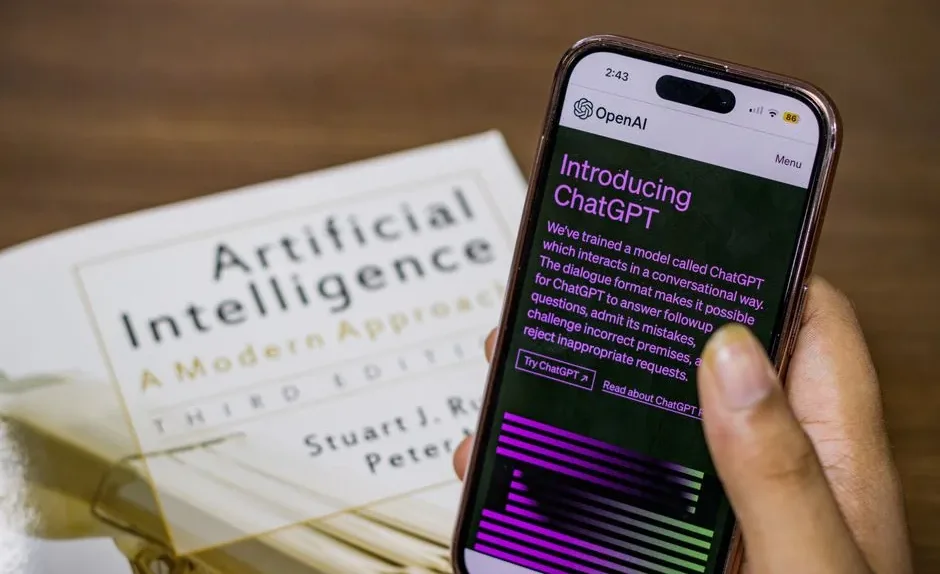
OpenAI’s ChatGPT Work, launched July 10, 2026, moves the product from a conversational tool to a task-execution platform. Powered by GPT-5.6, it accepts a stated outcome, breaks it into steps, and works through complex projects for hours without user intervention — producing documents, spreadsheets, presentations, and websites from connected apps and files.
VentureBeat reported that Ty Geri, a product manager at OpenAI who helped build ChatGPT Work, described the product’s goal plainly: “What’s really exciting is we’ve seen how much Codex has been able to push the frontier of what we can get done with these AI tools, as opposed to just getting i[nformation].” The intent, Geri said, is to bring those agentic capabilities to a broader workforce.
The launch arrives as OpenAI’s financial profile grows rapidly. According to VentureBeat, the company confidentially submitted a draft S-1 to the SEC last month, with reported valuations clustering between $730 billion and $852 billion and annualized revenue that has passed $25 billion. ChatGPT Work is clearly designed to justify that valuation by capturing enterprise software budgets currently held by Microsoft 365 and Google Workspace.
The integrations span email, Slack, calendar, and code repositories — positioning ChatGPT Work less as a writing assistant and more as a digital employee that operates across the full stack of office software.
Proton Adds AI Assistant Lumo to Its Encrypted Productivity Suite
Proton, the Swiss privacy-software company, has introduced an AI assistant called Lumo alongside its existing lineup of encrypted email, docs, sheets, and calendar tools. The move brings AI features to a platform explicitly built around data minimization — a deliberate contrast to the data practices of larger competitors.
The Verge reported that Proton CTO Bart Butler framed the company’s core offering not as software features but as trust. Butler told The Verge’s Decoder podcast that Proton’s mission includes succeeding as a viable competitor to Big Tech at scale, while preserving its privacy values — a tension the company manages partly through its nonprofit foundation structure and its servers’ physical location in Switzerland.
Proton’s approach to AI is consequential for users who handle sensitive professional data — legal, financial, or medical — where feeding content into a cloud-based LLM raises compliance questions. Lumo is marketed as an AI assistant built against different incentives than those of advertising-funded platforms. Whether the underlying model architecture fully delivers on that promise has not been independently verified.
Even Realities G2 Smart Glasses Target Meeting-Heavy Workers
Even Realities shipped its G2 smart glasses in July 2026, pitching the device at professionals who spend significant time in meetings, presentations, and international travel. The glasses have no camera — a deliberate design choice to avoid recording bystanders — and display information via a 1,200-nit monochrome heads-up display in a green neon style visible in any lighting.
TechCrunch reviewed the G2 and noted several hardware improvements over the G1: four microphones (up from two), a 75% larger display area, and a 60Hz refresh rate compared to 20Hz on the predecessor. The frame weighs 35 grams, using magnesium alloy and titanium alloy construction.
The reviewer noted that early connectivity between the glasses and the companion phone app was unreliable, with frequent disconnections. After several app updates over a few months of testing, that issue improved substantially. The glasses’ productivity use cases — live transcription, translation, meeting notes displayed in the wearer’s field of view — depend entirely on a stable phone connection, which remains the device’s primary constraint.
A demo video shows the live transcript feature, which displays spoken conversation directly on the lenses during meetings.
AI Coding Tools Carry Hidden Costs Beyond the Subscription Price
AI coding assistants — a subset of the broader productivity software market — are nearly universal in enterprise development, but the full cost picture is more complicated than the subscription fee. According to GitLab’s 2026 AI Accountability Report, 91% of organizations use two or more AI coding tools, and 54% use three or more. A separate Black Duck survey put enterprise adoption at 97%.
Dark Reading reported that tool subscriptions run $19 to $200 per user per month, but organizations also absorb costs from security scanning, vulnerability remediation, and false positives generated by AI-written code. SonarSource’s State of Code Developer Survey 2026, which collected 1,149 developer responses, found that AI-generated code introduces quality and security concerns that require additional review cycles.
The pattern matters for productivity software buyers broadly: AI tools that automate writing, meeting notes, or email drafting carry analogous hidden costs — data governance review, output verification, and integration maintenance — that don’t appear in the per-seat price.
What This Means
The July 2026 product moves from OpenAI, Proton, and Even Realities reflect three distinct bets on where AI productivity value actually sits. OpenAI is betting on deep integration — an agent that acts across every connected tool, reducing the friction of switching between apps. Proton is betting on trust as a differentiator, arguing that professionals will pay for AI that doesn’t monetize their data. Even Realities is betting on ambient, always-on access — information in the field of view rather than on a screen.
The common thread is that none of these products are writing assistants in the narrow sense. They’re attempting to absorb more of the cognitive overhead of knowledge work: scheduling, summarizing, executing, and translating. The risk, as the AI coding data illustrates, is that automation at scale generates new error surfaces that require human review — potentially consuming the time savings the tools were supposed to create.
For enterprise buyers evaluating these tools in the second half of 2026, the relevant question is not whether AI improves individual task speed, but whether the total system — including verification, governance, and integration costs — delivers net time savings at the team level.
FAQ
What is ChatGPT Work and how does it differ from standard ChatGPT?
ChatGPT Work is an autonomous AI agent launched by OpenAI on July 10, 2026, built on GPT-5.6. Unlike standard ChatGPT, it connects to email, Slack, calendars, and code repositories, then executes multi-step tasks independently over hours rather than answering single questions.
What does Proton’s Lumo AI assistant do?
Lumo is an AI writing and productivity assistant integrated into Proton’s encrypted suite of email, docs, sheets, and calendar tools. Proton markets it as a privacy-respecting alternative to AI assistants from advertising-funded platforms, with the company’s servers based in Switzerland.
Are AI productivity tools worth the cost for enterprises?
The subscription price — ranging from $19 to $200 per user per month for AI coding tools alone, according to Dark Reading — understates the total cost. Security scanning, output review, and integration maintenance add overhead that can offset productivity gains, particularly when AI-generated content requires systematic verification before use.
Related news
Sources
- AI Coding: Do Security Risks Outweigh Productivity Gains? – Dark Reading
- Smart glasses without a camera? Even Realities bets productivity beats recording everyone – TechCrunch
- ‘No company is going to go to jail for you’: Proton’s CTO on balancing privacy, policy, and trust – The Verge
- OpenAI introduces ChatGPT Work, a cloud-based AI agent that manages tasks across email, Slack and calendars – VentureBeat
- Focus: Wall Street banks ramp up digital assistants in bid to win productivity race – Reuters – Google News – Banking