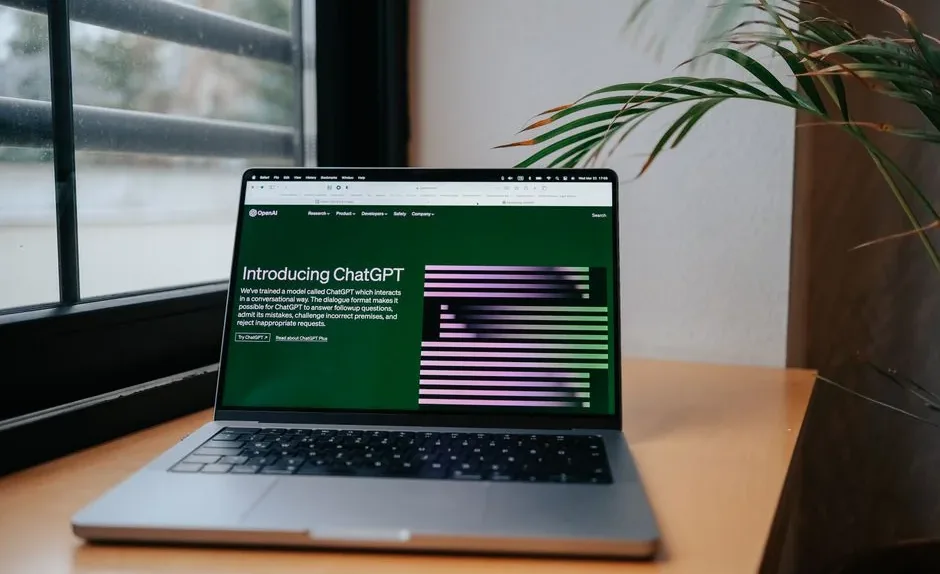

OpenAI launched ChatGPT Work on Thursday, a cloud-based AI agent built on GPT-5.6 that manages tasks across email, Slack, calendars, and code repositories — marking the company’s most direct push yet to reposition ChatGPT as an autonomous workplace platform. The launch arrives as Wall Street banks accelerate their own AI assistant deployments and privacy-focused Proton rolls out a new AI writing tool, signaling that the AI productivity software market is consolidating around a handful of competing philosophies in July 2026.
ChatGPT Work Targets the Full Office Stack
OpenAI’s ChatGPT Work connects to email, calendars, code repositories, and messaging apps to execute multi-step tasks independently — producing documents, spreadsheets, presentations, and websites from a single stated goal. The agent breaks complex projects into smaller steps and, according to OpenAI’s product announcement, can stay with a project for hours without requiring ongoing user input.
The product is powered by GPT-5.6, OpenAI’s current flagship model. Ty Geri, a product manager at OpenAI who helped build ChatGPT Work, told VentureBeat that the mission is “to democratize the kind of agentic AI capabilities that OpenAI’s internal engineering tool, Codex, has already demonstrated — as opposed to just getting i[nformation].” The launch comes as OpenAI’s annualized revenue has surpassed $25 billion and the company has confidentially filed a draft S-1 with the SEC, with reported valuations clustering between $730 billion and $852 billion.
The strategic logic is clear: by embedding an agent directly into the ChatGPT interface rather than selling a separate enterprise product, OpenAI reduces the friction of adoption for the tens of millions of users already in the ecosystem.
Proton Adds AI Assistant While Stressing Privacy
Proton, the Swiss company behind encrypted email and productivity software, has introduced an AI writing assistant called Lumo alongside its existing suite of docs, sheets, and calendar tools. The company’s CTO, Bart Butler, told The Verge’s Decoder podcast that what Proton sells at a high level “isn’t really the products themselves, but actually trust.”
That positioning is structural, not just rhetorical. Two years ago, Proton transitioned to a nonprofit structure governed by a foundation, and its servers remain based in Switzerland — chosen in part for the country’s geopolitical neutrality. Butler acknowledged the tension between Proton’s privacy mission and its need to scale to compete with Big Tech productivity suites, stating plainly that “no company is going to go to jail for you” — a warning to users not to rely solely on a vendor’s goodwill rather than verifiable technical and legal protections.
For enterprise buyers evaluating AI writing assistants, Proton’s model offers a meaningful contrast to OpenAI’s data-integrated approach, particularly for regulated industries.
Wall Street Banks Accelerate AI Assistant Rollouts
Major financial institutions are deploying AI productivity assistants at scale, according to Reuters, as banks compete to reduce analyst workloads on document-heavy tasks like research summaries, client communications, and compliance drafts. The Reuters report frames the deployments as a productivity race, with banks investing in digital assistants embedded in existing workflows rather than standalone chat interfaces.
The financial sector’s urgency reflects a broader enterprise pattern: AI writing and summarization tools are moving from pilot programs into standard-issue software for knowledge workers. Banks are particularly focused on email drafting, meeting summarization, and document generation — the same workflow categories ChatGPT Work is targeting.
AI Coding Tools Carry Hidden Costs Beyond Licensing
AI productivity gains in software development are real but unevenly distributed, and the cost math is more complicated than per-seat pricing suggests. According to GitLab’s 2026 AI Accountability Report, 91% of organizations are using two or more AI coding tools simultaneously, and 54% use three or more — a fragmentation that multiplies licensing costs.
Licensing fees for AI coding tools range from $19 to $200 per user per month, according to Dark Reading’s analysis, but those figures exclude the cost of security scanning, vulnerability remediation, and managing false positives generated by AI-produced code. A Black Duck survey found enterprise AI code adoption had reached 97%, while SonarSource’s State of Code Developer Survey 2026, drawing on 1,149 developer responses, documented ongoing concerns about code quality and security debt.
The hidden costs are significant enough that Dark Reading’s analysis concludes organizations should model full ROI — including security tooling overhead — before committing to a multi-tool stack.
Smart Glasses Target Meeting-Heavy Professionals
Even Realities’ G2 smart glasses, reviewed by TechCrunch, represent a hardware-side bet on AI productivity: a 35-gram, camera-free wearable with a 1,200-nit heads-up display that surfaces meeting notes, translations, and calendar information in a user’s field of view. The G2 improves on its predecessor with four microphones (up from two), a 75% larger display area, and a 60Hz refresh rate compared to 20Hz on the G1.
The absence of a camera is a deliberate product decision. Even Realities is targeting professionals who are frequently in meetings or traveling internationally, and the company wants bystanders to have no concern about being recorded. A demo video shows the glasses displaying live transcription and translation text in a green monochrome style. The main limitation TechCrunch identified is reliance on a phone connection, which caused frequent disconnections in early firmware — an issue the company has since improved through app updates.
What This Means
The July 2026 AI productivity market is splitting along two axes: capability vs. trust, and software vs. hardware. OpenAI is betting that most enterprise users will accept data integration in exchange for genuine task automation — ChatGPT Work’s ability to independently complete multi-hour projects is a qualitative step beyond earlier AI writing assistants. Proton is betting that a meaningful segment of users, particularly in regulated industries, will pay a premium for verifiable privacy guarantees.
The Wall Street deployment wave suggests enterprise adoption is past the evaluation stage in finance. The coding tool data tells a more cautionary story: high adoption rates do not automatically translate into positive ROI when security and remediation costs are factored in. Organizations building AI productivity stacks in 2026 face a genuine accounting problem — the per-seat license is the visible cost, but the operational overhead of managing AI-generated output quality is where the real expense accumulates.
For hardware, the G2 glasses illustrate how narrow the current market for ambient AI productivity devices remains. The value proposition is real for a specific user — frequent meetings, multilingual environments, hands-free information access — but the phone-dependency limitation keeps it a specialist tool rather than a mass-market one.
FAQ
What is ChatGPT Work and how does it differ from standard ChatGPT?
ChatGPT Work is an AI agent built on GPT-5.6 that connects to email, calendars, Slack, and code repositories to execute multi-step tasks autonomously, producing finished documents and reports without continuous user input. Standard ChatGPT operates as a question-and-answer interface; ChatGPT Work is designed to take a stated goal and complete it independently over hours.
How much do AI coding tools cost per user in 2026?
Licensing fees range from $19 to $200 per user per month, according to Dark Reading’s July 2026 analysis. That figure excludes additional costs for security scanning and vulnerability remediation of AI-generated code, which can substantially increase the total cost of ownership.
What makes Proton’s AI assistant different from OpenAI’s offerings?
Proton’s Lumo assistant is built within a suite of end-to-end encrypted productivity tools, with servers based in Switzerland and a nonprofit foundation governance structure designed to align incentives with user privacy rather than data monetization. OpenAI’s ChatGPT Work, by contrast, integrates deeply with connected apps and files to deliver broader task automation capabilities.
Related news
- Enterprise AI Will Be Defined By Trust – Forbes Tech
- Apple targets dozens of OpenAI employees with legal letters – Financial Times Tech
- Home Depot Promo Codes: 50% Off in July 2026 – Wired
Sources
- AI Coding: Do Security Risks Outweigh Productivity Gains? – Dark Reading
- Smart glasses without a camera? Even Realities bets productivity beats recording everyone – TechCrunch
- ‘No company is going to go to jail for you’: Proton’s CTO on balancing privacy, policy, and trust – The Verge
- OpenAI introduces ChatGPT Work, a cloud-based AI agent that manages tasks across email, Slack and calendars – VentureBeat
- Focus: Wall Street banks ramp up digital assistants in bid to win productivity race – Reuters – Google News – Banking