
NVIDIA CEO Jensen Huang visited Tokyo this week for a series of meetings with Japan’s AI and manufacturing leaders, as separate U.S. congressional testimony confirmed that H200 chip shipments to China have quietly resumed — though at low volumes. The trip coincided with new details on NVIDIA’s automotive ambitions and a thermal controversy affecting Blackwell gaming GPUs.
H200 Chips Reach China in ‘Very Small’ Quantities
A senior U.S. trade official confirmed on July 14, 2026, that H200 AI chips from NVIDIA have begun reaching China and Hong Kong — but in limited numbers. The disclosure is the clearest public signal yet that some H200 exports to China have restarted following earlier restrictions.
“It’s a very small quantity of chips,” Under Secretary of Commerce for Industry and Security Jeffery Kessler said at a congressional hearing, according to CNBC. Kessler described the shipments as “very few,” stopping short of providing unit figures or revenue estimates. The remark carries commercial weight: even modest H200 sales to China could meaningfully lift NVIDIA’s revenue, given that the H200 carries a per-unit price in the range of tens of thousands of dollars and China remains one of the world’s largest AI compute markets.
The H200 succeeded the H100 with 141GB of HBM3e memory, and has been in high demand among cloud providers globally. Whether the current trickle into China reflects a deliberate policy shift or a narrow licensing carve-out remains unclear from Kessler’s testimony.
Huang’s Tokyo Visit: Robots, Manufacturers, and Fujitsu
Jensen Huang arrived in Tokyo this week for a multi-day engagement with Japan’s technology sector, skipping a formal press conference in favor of an unannounced appearance at NVIDIA’s Build-a-Claw developer event at Studio Koku — a modern venue inside the historic Happo-en garden, according to the NVIDIA AI Blog.
The event had developers using NVIDIA’s open models and robotics platform to build pick-and-place robot arms. Huang’s surprise appearance drew an immediate reaction from the room of builders — a deliberate choice that signaled NVIDIA’s push to position Japan as a flagship robotics market.
Fujitsu is among the highest-profile Japanese partners in this effort. According to Fortune, the communications and IT conglomerate is leading a major AI initiative using NVIDIA technology, combining Japan’s manufacturing strengths in robotics with large-scale AI deployment. Huang framed Japan’s demographic challenge — an aging population and persistent labor shortages — as a direct use case for physical AI and autonomous systems. “Japan’s excellence is a philosophy, a way of life,” Huang said, per Fortune’s reporting.
NVIDIA’s Automotive Unit: Competing for Its Own Compute
NVIDIA’s automotive division faces an unusual internal constraint: it has to compete with the rest of the company for GPU access. Xinzhou Wu, head of automotive at NVIDIA, told The Verge’s Decoder podcast that even his team isn’t immune to the GPU shortage that has defined the AI boom.
NVIDIA has supplied chips to the auto industry for years and has built a full autonomous driving stack that carmakers can deploy directly. That system is already active in newer Mercedes EV models, Wu confirmed. A demo video released at GTC Taiwan showed the in-car AI model running continuously — narrating driving conditions in real time — illustrating how compute-intensive the always-on approach to autonomous driving has become.
Wu’s comments come as the broader autonomous vehicle timeline faces renewed skepticism. EV adoption in the United States has slowed significantly, self-driving systems continue to struggle with edge cases, and vehicle prices remain elevated as consumers absorb inflation pressure across the economy, The Verge noted.
Blackwell Gaming GPUs Hit Thermal Limits
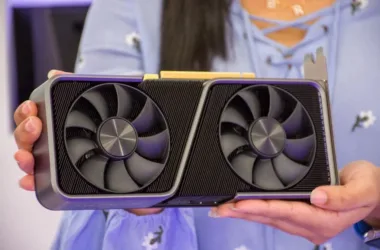
On the consumer hardware side, NVIDIA’s Blackwell-generation gaming GPUs are facing scrutiny over thermal management. According to Tom’s Hardware, the RTX 5070 Ti has been observed throttling at 107°C due to poor thermal interface material (TIM) application — a manufacturing or assembly issue that causes the GPU to hit its thermal ceiling under load and reduce clock speeds to compensate.
The hotspot temperature sensor that would normally surface this data to end users is not accessible through standard monitoring tools on Blackwell gaming GPUs. Tom’s Hardware reported that the sensor remains readable only through NVIDIA’s internal MODS diagnostic tool — meaning most consumers and third-party reviewers would have no visibility into the problem without specialized access. The finding raises questions about quality control consistency across RTX 50-series board production.
What This Means
This week’s NVIDIA news cluster illustrates the company operating simultaneously across four distinct pressure points. The H200 China confirmation — however small the current volume — matters because it reopens a revenue channel that trade restrictions had effectively closed, and markets will watch whether that trickle widens. The Japan visit is less about any single deal and more about NVIDIA cementing its position as the default infrastructure layer for the next wave of industrial robotics, with Fujitsu as a credible anchor partner.
The automotive division’s internal GPU competition is a telling detail: NVIDIA’s own product teams can’t get enough of its chips, which underscores both the strength of demand and the real allocation constraints that exist even inside the company. And the Blackwell thermal issue, while contained to a specific SKU and assembly defect, adds to a pattern of early-production quality concerns that NVIDIA will need to address as RTX 50-series volume ramps.
Taken together, the week shows NVIDIA managing the complexity of being a company whose hardware is simultaneously too scarce, too hot, and too central to global AI ambitions to slow down.
FAQ
Have NVIDIA H200 chips been shipped to China?
Yes. U.S. Under Secretary of Commerce Jeffery Kessler confirmed on July 14, 2026, that H200 chips have been shipped to China and Hong Kong, describing the quantity as “very few” and “a very small quantity of chips,” according to CNBC. The shipments signal that some H200 exports to China have resumed, though the scale and policy basis remain unclear.
What is NVIDIA doing in Japan?
NVIDIA CEO Jensen Huang visited Tokyo this week to meet with Japan’s AI and manufacturing sector, including a surprise appearance at a developer robotics event and engagement with partners such as Fujitsu. NVIDIA is positioning Japan as a key market for physical AI and industrial robotics, partly in response to Japan’s aging population and labor shortages.
What is the RTX 5070 Ti thermal throttling issue?
Tom’s Hardware found that NVIDIA’s RTX 5070 Ti, part of the Blackwell gaming GPU lineup, throttles at 107°C due to poor thermal interface material application. The hotspot temperature sensor that tracks this is only accessible via NVIDIA’s internal MODS tool, meaning standard monitoring software cannot detect the problem, leaving most users unaware of the thermal ceiling being hit.
Related news
- Apple dethrones Nvidia to regain title of world’s most valuable company – The Guardian – Google News – NVIDIA
- Apple dethrones Nvidia as world’s most valuable company, ending the chipmaker’s long run at the top – CNBC – Google News – Apple
- Apple briefly leapfrogs Nvidia as world’s most valuable company – Financial Times Tech
Sources
- NVIDIA and Japan Bring Full-Stack AI and Robotics to Every Industry – NVIDIA AI Blog
- U.S. trade official says ‘very few’ Nvidia H200 AI chips have been shipped to China – CNBC Tech
- Hotspot temperature sensor on Nvidia’s Blackwell gaming GPUs is still accessible if you have access to Nvidia’s internal MODS tool — Nvidia RTX 5070 Ti caught throttling at 107°C over poor TIM application – Tom’s Hardware – Google News – NVIDIA
- Even Nvidia’s head of automotive fights with Nvidia for compute – The Verge
- ‘Japan’s excellence is a philosophy, a way of life’: Jensen Huang wants robots to take care of an aging society with a labor shortage – Fortune AI