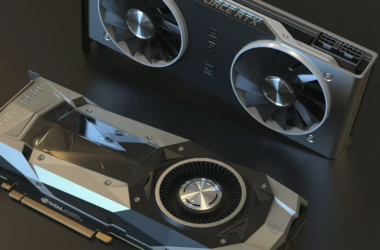

NVIDIA’s dominance in AI hardware through its H100, H200, and upcoming Blackwell GPU architectures has positioned the company at the center of critical ethical debates about artificial intelligence development and deployment. As CEO Jensen Huang continues to drive the company’s expansion into AI infrastructure, the societal implications of concentrated computing power raise fundamental questions about fairness, accountability, and democratic access to transformative technology.
The company’s GPU launches represent more than technological milestones—they shape who can participate in the AI revolution and how AI systems are developed, deployed, and controlled across society.
The Concentration of AI Power
NVIDIA’s chip announcements reveal a concerning trend toward the centralization of AI capabilities in the hands of a few major technology companies. The H100 and H200 GPUs have become essential infrastructure for training large language models and advanced AI systems, creating significant barriers to entry for smaller organizations, academic institutions, and developing nations.
This concentration of computing power raises several ethical concerns:
- Democratic access: Only well-funded organizations can afford the thousands of GPUs required for cutting-edge AI research
- Innovation bottlenecks: Smaller players may be excluded from breakthrough AI development
- Geopolitical implications: Nations without access to advanced chips face technological sovereignty challenges
The Blackwell architecture promises even greater computational capabilities, potentially widening the gap between AI “haves” and “have-nots.” This digital divide could perpetuate existing inequalities and create new forms of technological colonialism.
Environmental and Sustainability Concerns
Jensen Huang’s vision for ubiquitous AI computing comes with substantial environmental costs that demand urgent ethical consideration. Each new GPU generation increases power consumption and computational density, contributing to the growing carbon footprint of AI development.
Key environmental challenges include:
- Energy consumption: Data centers running NVIDIA GPUs consume massive amounts of electricity
- Manufacturing impact: Chip production requires rare earth materials and energy-intensive processes
- E-waste concerns: Rapid hardware cycles contribute to electronic waste accumulation
The company’s responsibility extends beyond product performance to include lifecycle environmental impact. As AI becomes more pervasive, the sustainability of GPU-powered computing infrastructure becomes a critical societal issue requiring transparent reporting and mitigation strategies.
Algorithmic Bias and Fairness Implications
NVIDIA’s hardware choices significantly influence the development of AI systems and their potential for perpetuating or amplifying societal biases. The company’s GPUs enable the training of increasingly large models, but scale alone does not guarantee fairness or reduce bias.
Critical considerations include:
- Training data requirements: Larger models demand more data, potentially amplifying existing biases in datasets
- Computational accessibility: Bias testing and mitigation require significant computational resources
- Representation gaps: Limited access to advanced hardware may exclude diverse perspectives from AI development
The H200’s enhanced memory capabilities allow for more complex model architectures, but without deliberate attention to fairness, these advances may inadvertently entrench discriminatory patterns. NVIDIA bears responsibility for ensuring its hardware supports equitable AI development practices.
Regulatory and Governance Challenges
The rapid pace of NVIDIA’s chip announcements outpaces regulatory frameworks designed to govern AI development and deployment. This regulatory lag creates governance gaps that could have profound societal consequences.
Key regulatory considerations include:
- Export controls: Advanced chips face restrictions that affect global AI development patterns
- Monopoly concerns: NVIDIA’s market dominance raises antitrust questions
- Safety standards: Hardware capabilities may outpace safety testing and validation processes
Policymakers struggle to balance innovation incentives with the need for responsible AI development. The Blackwell platform’s unprecedented capabilities will likely intensify these regulatory challenges, requiring new frameworks for oversight and accountability.
Transparency and Accountability Gaps
NVIDIA’s business model and hardware specifications often lack the transparency necessary for public accountability. The company’s chip designs and performance characteristics are closely guarded trade secrets, limiting external oversight of their societal impact.
Transparency challenges include:
- Performance claims: Independent verification of GPU capabilities remains difficult
- Environmental impact: Limited public data on energy consumption and carbon footprint
- Supply chain ethics: Unclear visibility into manufacturing practices and labor conditions
Greater transparency would enable researchers, policymakers, and civil society organizations to better assess the ethical implications of NVIDIA’s hardware decisions and their cascading effects on AI development.
Global Equity and Access Issues
Jensen Huang’s announcements often focus on technological capabilities while overlooking global equity implications. The distribution of advanced AI hardware reflects and reinforces existing global power imbalances.
Equity concerns include:
- Geographic concentration: Advanced chips primarily serve wealthy nations and corporations
- Educational access: Universities in developing countries lack resources for cutting-edge AI research
- Economic barriers: High costs exclude many potential innovators from AI development
NVIDIA could play a positive role by developing tiered access programs, educational partnerships, and affordable hardware options that democratize AI capabilities across diverse communities and contexts.
What This Means
NVIDIA’s AI hardware developments represent a critical juncture for society’s relationship with artificial intelligence. The company’s choices about chip design, pricing, and distribution will significantly influence who can participate in the AI revolution and how AI systems impact different communities.
The concentration of AI capabilities in advanced GPUs like the H100, H200, and Blackwell platforms creates both opportunities and risks. While these technologies enable breakthrough AI applications in healthcare, climate science, and education, they also risk entrenching inequalities and concentrating power in the hands of a few well-resourced actors.
Moving forward, NVIDIA must embrace greater responsibility for the societal implications of its hardware decisions. This includes improving transparency, supporting equitable access initiatives, addressing environmental concerns, and engaging with diverse stakeholders in technology development processes.
The AI revolution’s promise of benefiting humanity depends not just on technological advancement, but on ensuring that these powerful tools are developed and deployed in ways that serve the common good. NVIDIA’s leadership position comes with corresponding ethical obligations that extend far beyond quarterly earnings and technical specifications.
FAQ
Q: How does NVIDIA’s GPU dominance affect AI research accessibility?
A: NVIDIA’s market position creates barriers for smaller organizations and researchers who cannot afford expensive H100 or H200 chips, potentially limiting diverse perspectives in AI development and concentrating innovation among well-funded entities.
Q: What environmental concerns arise from NVIDIA’s latest chip announcements?
A: Advanced GPUs consume significant energy for both training and inference, contributing to data center carbon emissions. The rapid pace of hardware updates also raises concerns about electronic waste and resource consumption in manufacturing.
Q: How can policymakers address the ethical challenges of concentrated AI hardware?
A: Regulators could implement transparency requirements, support competitive alternatives, establish public access programs for research institutions, and develop environmental standards for AI hardware to ensure broader societal benefit from these technologies.
Related news
- Newly Public Quantum Computing Firm Rated Buy On Nvidia Pact – Investor’s Business Daily – Google News – NVIDIA
- If You Missed Out on Nvidia’s Wild Gains, This Might Finally Be the Time to Buy Nvidia Stock. – Yahoo Finance – Google News – NVIDIA
- New Rowhammer Attacks on NVIDIA GPUs Enable Full System Takeover – infoq.com – Google News – NVIDIA
Sources
- China tech companies going gangbusters in the Gulf – Asia Times – Google News – Tech Companies