
Chinese automakers are rapidly integrating advanced AI and autonomous driving technologies across their vehicle lineups, while California introduces new regulations for robotaxi operations and Uber expands beyond ride-sharing into an AI-powered travel platform.
Chinese Manufacturers Accelerate AI Adoption
At the 2026 Beijing International Automotive Exhibition, Chinese manufacturers showcased widespread adoption of AI-powered driver assistance systems across price ranges. According to Wired, lidar sensors for advanced driver assistance are now appearing in EVs priced under 100,000 yuan ($14,500), while drive-by-wire technology — which replaces mechanical steering with electrical signals — featured prominently across multiple models.
The show displayed 1,451 vehicles with 181 world premieres, making it the largest auto show in history by exhibition space and vehicle count. Chinese manufacturers demonstrated leadership in AI integration, driver-assistance systems, in-car chips, smart cockpits, and high-performance EVs.
Even traditional automakers are adapting to the AI-first approach. Toyota’s local Chinese models now incorporate Huawei’s powertrains and smart cockpit operating systems, reflecting the broader industry shift toward AI-powered vehicle experiences.
California Introduces Robotaxi Citation Rules
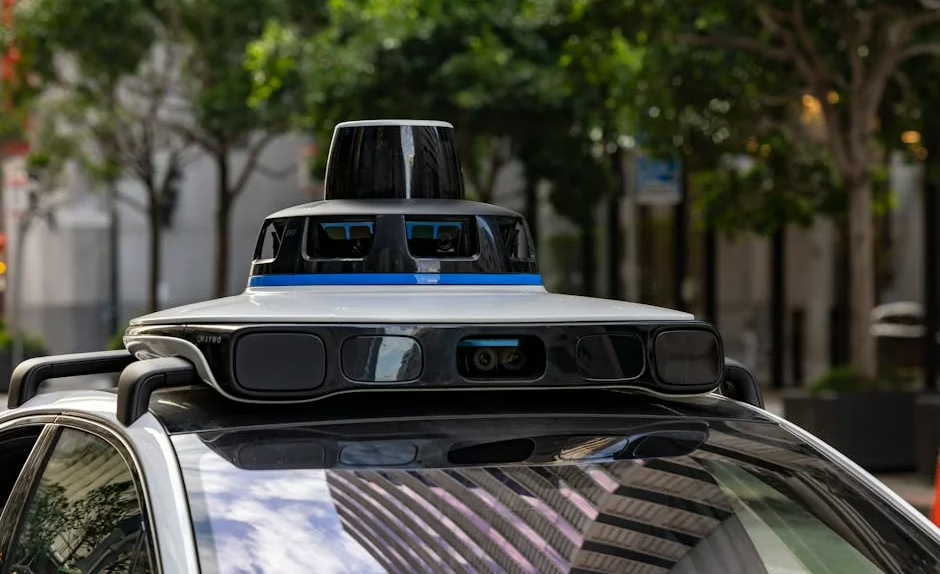
California’s Department of Motor Vehicles issued new autonomous vehicle testing and deployment regulations spanning 100 pages. The rules establish how law enforcement can cite robotaxi companies for traffic violations committed by their vehicles.
Under the “Notice of Autonomous Vehicle Noncompliance” rule, TechCrunch reported that manufacturers must report violations to the DMV within 72 hours of receiving citations from law enforcement. The violations carry no direct monetary fines but provide data for the DMV to identify operational problems and take regulatory action.
The regulations include enhanced requirements for data collection, sharing protocols, operator training, and operational standards. Industry engineers and policy experts expressed strong opinions about the rules during the public commentary period, though few spoke publicly about specific concerns.
Uber Transforms Into AI-Powered Travel Platform
Uber is positioning itself as a comprehensive travel platform beyond ride-sharing, integrating hotel bookings through an Expedia partnership and adding services like in-car coffee, snacks, and personal shopping. CEO Dara Khosrowshahi described this expansion as creating an “everything app” during The Verge’s annual GO-GET event coverage.
CNBC reported Uber’s first-quarter revenue grew 14%, with the company projecting gross bookings between $56.25 billion and $57.75 billion for the current period — exceeding analyst expectations. The stock jumped 7% following the guidance announcement.
Khosrowshahi acknowledged potential disruption from AI chatbots that could book transportation services directly, but expressed openness to partnerships with AI companies. The CEO indicated Uber views AI integration as an opportunity rather than a threat to its platform strategy.
Enterprise AI Integration Challenges
The automotive AI transformation faces implementation hurdles as companies balance technological advancement with regulatory compliance. Chinese manufacturers are rapidly deploying AI features across price points, while Western markets grapple with regulatory frameworks for autonomous operations.
The California regulations reflect growing scrutiny of autonomous vehicle deployment, requiring companies to demonstrate robust data collection and incident reporting capabilities. This regulatory approach may influence how AI-powered vehicles operate in other jurisdictions.
Platform Competition in AI-Powered Mobility
Uber’s platform expansion strategy positions the company to compete with AI assistants that could potentially bypass traditional ride-sharing apps. By integrating multiple travel services, Uber aims to maintain user engagement and reduce the risk of AI-powered booking systems replacing its core functionality.
The company’s approach mirrors broader industry trends where traditional transportation companies are expanding into adjacent services to maintain platform relevance. This strategy becomes critical as AI capabilities enable more sophisticated travel planning and booking automation.
Chinese automakers’ rapid AI integration demonstrates how quickly automotive technology can advance when manufacturers prioritize software capabilities alongside traditional vehicle engineering. The integration of lidar and drive-by-wire systems across price ranges suggests AI-powered features will become standard rather than premium options.
What This Means
The automotive industry is experiencing a fundamental shift toward AI-first vehicle design, with Chinese manufacturers leading integration across price segments while Western markets focus on regulatory frameworks. California’s robotaxi citation rules establish precedent for how autonomous vehicles will be regulated as they scale, potentially influencing national and international policy.
Uber’s platform expansion reflects broader competitive pressures from AI-powered services that could disintermediate traditional transportation apps. Companies that fail to integrate AI capabilities or expand their service offerings risk losing market share to more comprehensive platforms.
The speed of AI adoption in Chinese vehicles — from budget EVs to luxury models — suggests the technology will become commoditized faster than traditional automotive features. This acceleration pressures global automakers to accelerate their own AI integration timelines or risk falling behind in key markets.
FAQ
How are Chinese automakers integrating AI into budget vehicles?
Chinese manufacturers are including lidar sensors and AI-powered driver assistance systems in EVs under $14,500, along with drive-by-wire technology and smart cockpit systems. This represents a significant cost reduction compared to premium vehicle AI implementations.
What happens when a robotaxi gets a traffic ticket in California?
Under new DMV rules, the robotaxi company must report the violation to regulators within 72 hours. While there are no direct monetary fines, these violations become data points for regulatory oversight and potential enforcement actions.
How is Uber competing with AI assistants that could book rides directly?
Uber is expanding into a comprehensive travel platform with hotel bookings, in-car services, and personal shopping. This strategy aims to maintain user engagement and platform relevance even if AI assistants handle initial booking requests.