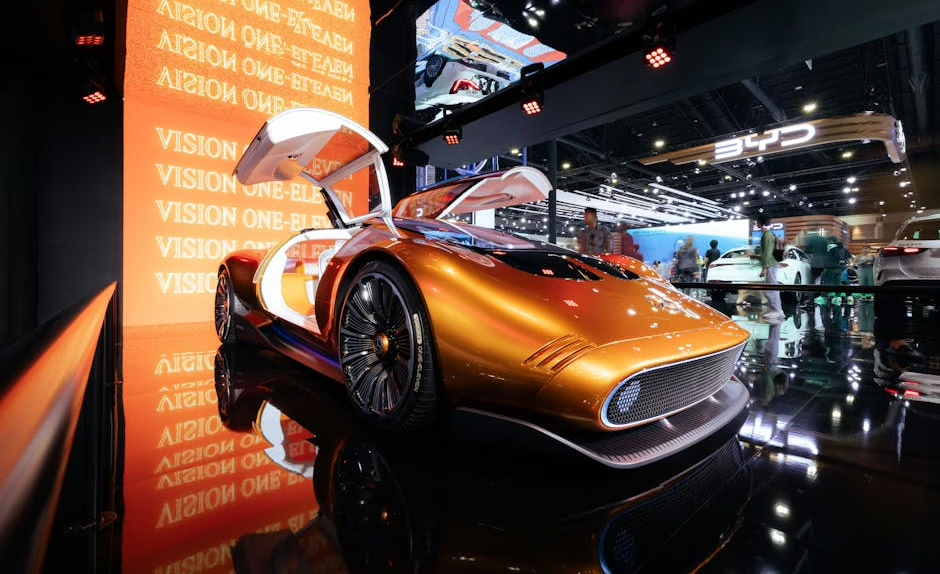

Chinese automakers showcased advanced AI-powered driver assistance systems and smart cockpit technologies at the 2026 Beijing International Automotive Exhibition, with LiDAR sensors now appearing in electric vehicles priced under $14,500. According to Wired, the show featured 1,451 vehicles including 181 world premieres, making it the largest auto show in history by both exhibition space and vehicle count.
The event highlighted a fundamental shift in automotive AI deployment, with Chinese manufacturers rapidly integrating sophisticated driver assistance technologies across price segments previously dominated by basic features. Even Toyota’s local Chinese models now incorporate Huawei’s powertrains and smart cockpit operating systems, signaling widespread adoption of AI-driven automotive technologies.
AI-Powered Features Reach Mass Market Vehicles
Chinese electric vehicle manufacturers demonstrated how AI technologies once reserved for premium vehicles are now standard in budget-friendly models. LiDAR sensors, which use laser technology for advanced driver assistance, have been integrated into EVs costing less than 100,000 yuan (approximately $14,500).
Drive-by-wire technology, which replaces traditional mechanical steering and hydraulic brake systems with electrical signals controlled by AI algorithms, appeared prominently across multiple vehicle categories. This technology enables more precise vehicle control and opens possibilities for advanced autonomous driving features.
Smart cockpit systems powered by AI now provide voice recognition, predictive navigation, and personalized user interfaces across vehicle lineups. These systems learn driver preferences and adapt vehicle settings automatically, representing a significant advancement in human-machine interaction within automotive environments.
Regulatory Framework Evolves for Autonomous Vehicles
California’s Department of Motor Vehicles issued new autonomous vehicle testing and deployment regulations this week, establishing clearer frameworks for AI-powered transportation systems. According to TechCrunch, the 100-page regulatory package includes provisions for law enforcement to cite AV companies for traffic violations committed by their autonomous vehicles.
The “Notice of Autonomous Vehicle Noncompliance” rule requires robotaxi manufacturers to report traffic violations to the DMV within 72 hours of receiving citations from law enforcement. While no monetary fines are attached to these violations, they provide data for the DMV to identify operational problems and take corrective action when necessary.
These regulations also establish more robust requirements for data collection, sharing protocols, operator training, and operational procedures. Industry insiders expressed mixed reactions to the new rules, with some viewing them as necessary oversight while others worry about implementation complexity.
Uber Expands AI Integration Amid Platform Evolution
Uber CEO Dara Khosrowshahi discussed the company’s broader AI strategy during The Verge’s annual interview, emphasizing Uber’s evolution into what the company calls an “everything app.” The platform now includes hotel booking through an Expedia partnership, in-vehicle amenities like coffee and snacks, and personal shopping services.
Khosrowshahi addressed concerns about AI chatbots potentially replacing Uber’s booking interface, suggesting the company remains open to partnerships while focusing on maintaining direct user relationships. CNBC reported that Uber’s first-quarter revenue grew 14% with gross bookings guidance of $56.25 billion to $57.75 billion, exceeding analyst expectations.
The company’s AI initiatives extend beyond ride-hailing to include route optimization, demand prediction, and driver matching algorithms. These systems process millions of data points to reduce wait times and improve service efficiency across Uber’s global operations.
European AI Startups Target Automotive Applications
European startups are developing specialized AI solutions for automotive and transportation sectors, with several companies gaining investor attention. TechCrunch’s survey of European venture capital firms identified multiple startups working on AI-powered automotive technologies.
Alta Ares, recommended by 20VC general partner Julien Codorniou, develops AI-powered counter-drone systems with applications in automotive security and autonomous vehicle protection. The Prague-based company represents growing interest in AI applications beyond traditional automotive use cases.
Other European startups focus on computer vision for autonomous driving, predictive maintenance systems, and AI-powered fleet management solutions. These companies benefit from Europe’s strong engineering talent while addressing specific regional requirements for automotive AI deployment.
What This Means
The automotive industry’s AI integration has reached an inflection point where advanced technologies are becoming standard features rather than premium options. Chinese manufacturers’ aggressive deployment of AI systems across price segments challenges traditional automotive hierarchies and forces global competitors to accelerate their own AI adoption.
Regulatory frameworks are evolving to address the operational realities of AI-powered vehicles, with California’s new rules serving as a potential model for other jurisdictions. The establishment of clear violation reporting procedures and data sharing requirements provides a foundation for broader autonomous vehicle deployment.
Uber’s platform expansion strategy demonstrates how transportation companies are leveraging AI to move beyond core services into adjacent markets. This approach may become necessary as AI assistants increasingly mediate consumer interactions with service providers.
FAQ
How affordable are AI-powered automotive features in Chinese vehicles?
LiDAR sensors for advanced driver assistance are now available in Chinese electric vehicles priced under $14,500, representing a significant reduction from previous premium-only availability. Chinese manufacturers have achieved this through scale production and integrated supply chains.
What happens when a robotaxi gets a traffic ticket?
Under California’s new regulations, law enforcement can cite autonomous vehicle companies for traffic violations. Companies must report these violations to the DMV within 72 hours, though no monetary fines are currently attached to the citations.
Are traditional automakers adopting Chinese AI automotive technologies?
Yes, even established manufacturers like Toyota are integrating Chinese AI solutions in their local market vehicles. Toyota’s Chinese models now use Huawei’s powertrains and smart cockpit operating systems, indicating widespread acceptance of Chinese automotive AI technologies.