
The automotive industry is experiencing a profound transformation that extends far beyond the flashy headlines about Tesla’s Autopilot or Waymo’s robotaxis. While self-driving technology captures most of the attention, a quieter revolution is happening in how artificial intelligence is reshaping every aspect of our driving experience.
The Human-Centric Approach to Automotive AI
The latest developments in automotive AI are moving away from the “replace the human” mentality toward what experts are calling “human-centric intelligence.” This approach recognizes that the best automotive AI systems work with drivers, not instead of them.
Think about it from a user perspective: most of us aren’t ready to completely hand over control to a computer, nor should we be. Instead, we want AI that makes us better, safer drivers while keeping us in the loop. This is where Advanced Driver Assistance Systems (ADAS) truly shine.
ADAS: The Unsung Hero of Automotive AI
While fully autonomous vehicles grab headlines, ADAS features are quietly saving lives every day. These systems include:
- Automatic Emergency Braking: Detects potential collisions and applies brakes when you can’t react fast enough
- Lane Departure Warning: Gently nudges you back into your lane when you start to drift
- Adaptive Cruise Control: Maintains safe following distances automatically
- Blind Spot Monitoring: Acts as an extra set of eyes where you can’t see
What makes these features so effective is their seamless integration into the driving experience. You barely notice them until they prevent an accident.
The Tesla Effect: Making AI Accessible
Tesla deserves credit for democratizing automotive AI. Their approach of pushing over-the-air updates has transformed how we think about car ownership. Your Model 3 or Model Y literally gets smarter while parked in your garage overnight.
This user-centric approach extends to Tesla’s interface design. The large touchscreen centralizes AI-powered features in an intuitive way, making advanced technology feel approachable rather than intimidating.
Waymo’s Different Path: Purpose-Built Intelligence
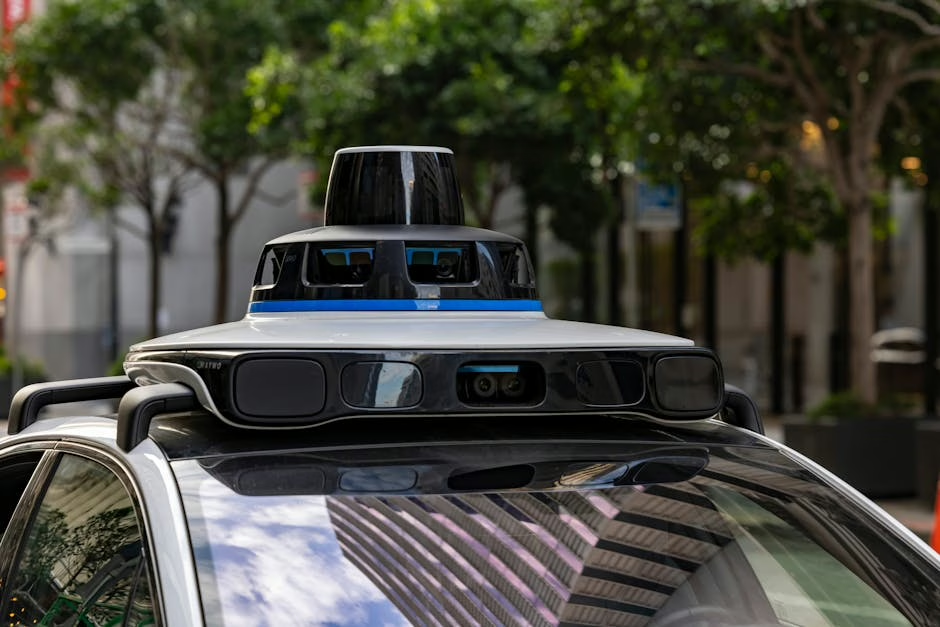
While Tesla focuses on enhancing human drivers, Waymo takes a different approach with purpose-built autonomous vehicles. Their recent expansions in Phoenix and San Francisco show how AI can completely reimagine transportation for specific use cases.
For users, Waymo represents the ultimate convenience: summon a ride through an app, and a vehicle arrives with no human driver needed. The experience feels magical, but it’s built on years of careful AI training in controlled environments.
Real-World Impact: Where AI Meets Daily Driving
The most compelling automotive AI applications solve everyday problems:
Traffic Navigation: AI-powered systems like those in modern EVs learn your commute patterns and suggest optimal routes based on real-time conditions.
Predictive Maintenance: Your car can now predict when components might fail and schedule service appointments automatically.
Energy Optimization: In electric vehicles, AI manages battery usage to maximize range based on your driving habits and planned routes.
The Road Ahead: Integration Over Revolution
The future of automotive AI isn’t about choosing between human drivers and robots. It’s about creating seamless partnerships between human intelligence and artificial intelligence.
This means designing systems that enhance rather than replace human capabilities. The best automotive AI feels invisible until you need it, then provides exactly the right assistance at the right moment.
As this technology continues evolving, the winners will be companies that prioritize user experience over flashy features. The goal isn’t to build the most advanced AI—it’s to build AI that makes driving safer, more efficient, and more enjoyable for everyone.
The automotive AI revolution is already here. It’s just more subtle—and more useful—than the headlines suggest.
Readers new to the underlying architecture can start with, see how large language models actually work.