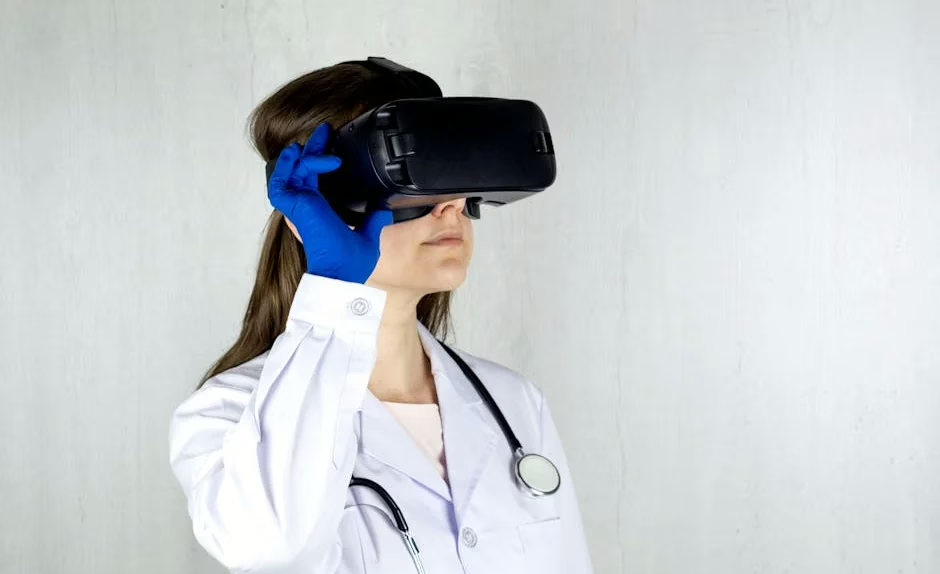

Healthcare AI deployment accelerated in 2026 as pharmaceutical giants like Regeneron expand data-driven drug discovery partnerships while NVIDIA and Google Cloud unveiled new AI infrastructure specifically designed for medical applications. According to Forbes, AI applications in radiology and clinical diagnostics are addressing long-standing healthcare disparities, particularly in women’s health.
Major Pharmaceutical Partnerships Drive AI Adoption
Regeneron partnered with TriNetX to expand its data-driven drug discovery capabilities, marking a significant shift toward AI-powered pharmaceutical research. The collaboration focuses on leveraging multi-modal healthcare data to accelerate clinical trial design and patient recruitment processes.
This partnership reflects a broader industry trend where pharmaceutical companies are integrating AI platforms to address supply-and-demand challenges in healthcare delivery. Research published at the NIH National Library of Medicine indicates that the convergence of genomics, demographic, clinical and phenotypic data with AI technologies is “fundamentally transforming models of healthcare delivery through AI-augmented healthcare systems.”
The integration spans multiple data types including genomics, economic indicators, and clinical phenotypes, creating comprehensive datasets that enable more precise drug targeting and patient stratification.
AI Radiology Addresses Healthcare Disparities
AI applications in mammogram radiology are specifically targeting gender disparities in healthcare outcomes. According to research by Michelle R. Kaufman, PhD, “artificial intelligence is widely heralded as a transformative force in medicine, promising to accelerate drug discovery and enhance clinical research to combat diseases that have plagued humans for millennia.”
The technology enables clinicians to read scans more accurately and efficiently, with particular benefits for women’s health diagnostics. AI-powered radiology systems can identify patterns in mammograms that human radiologists might miss, potentially improving early detection rates for breast cancer.
However, experts emphasize the need to address systemic bias in medical research data. AI developers are working to rectify “the systemic bias against women” that has historically affected medical research and clinical trial design.
Clinical Performance and Safety Considerations
Experts remain divided on AI’s ability to outperform human doctors in clinical settings. Alex Zhavoronkov, CEO of Insilico Medicine, told CNBC that AI can be used by consumers for basic health questions, potentially reducing time spent with physicians for routine inquiries.
OpenAI and Amazon launched healthcare tools for consumers in January 2026, expanding direct-to-consumer AI health applications. However, Shreehas Tambe, CEO of biotechnology company Biocon, warned of potential errors when AI health technology platforms are used by individuals “still getting a hang of it.”
The technology shows particular promise in pattern recognition and data analysis, areas where AI can process vast amounts of medical information faster than human clinicians. Clinical applications include genomics analysis, wearable device data interpretation, and predictive modeling for patient outcomes.
Infrastructure Developments Support Scale
NVIDIA and Google Cloud announced new AI infrastructure specifically designed for healthcare applications at Google Cloud Next in Las Vegas. The collaboration introduces NVIDIA Vera Rubin-powered A5X bare-metal instances and preview access to Google Gemini running on NVIDIA Blackwell GPUs.
The partnership includes confidential VMs with NVIDIA Blackwell GPUs, addressing healthcare data privacy requirements that have historically slowed AI adoption in clinical settings. These developments enable healthcare organizations to process sensitive patient data while maintaining HIPAA compliance and other regulatory requirements.
The infrastructure supports both agentic AI applications that manage complex clinical workflows and physical AI systems including robots and digital twins for medical device manufacturing and hospital operations.
Regulatory Pathway and FDA Considerations
While the FDA has not announced specific new approvals in these partnerships, the agency continues to develop frameworks for AI-powered medical devices and diagnostic tools. The regulatory pathway for AI healthcare applications typically requires extensive clinical validation and safety testing.
Current FDA guidance focuses on software as medical devices (SaMD) and requires manufacturers to demonstrate clinical efficacy through controlled trials. The agency has approved over 500 AI-powered medical devices since 2018, with radiology applications representing the largest category.
Healthcare organizations implementing AI systems must navigate complex regulatory requirements while ensuring patient safety and data privacy. The integration of AI into clinical workflows requires extensive staff training and validation protocols.
What This Means
The healthcare AI market is transitioning from experimental applications to production-ready systems with real clinical impact. The combination of pharmaceutical partnerships, improved infrastructure, and targeted applications in areas like radiology suggests 2026 could mark a inflection point for healthcare AI adoption.
However, success depends on addressing persistent challenges including data bias, regulatory compliance, and clinician training. The focus on women’s health and healthcare disparities indicates the industry recognizes AI’s potential to address systemic inequities, but implementation requires careful attention to training data and algorithm design.
The infrastructure developments from NVIDIA and Google Cloud provide the computational foundation needed for large-scale healthcare AI deployment, while pharmaceutical partnerships demonstrate industry confidence in AI-driven drug discovery and clinical research.
FAQ
Q: How does AI improve mammogram accuracy compared to human radiologists?
A: AI systems can identify subtle patterns in mammogram images that human radiologists might miss, potentially improving early detection rates for breast cancer. However, these systems work best when combined with human expertise rather than replacing radiologists entirely.
Q: What regulatory approvals do healthcare AI systems need from the FDA?
A: Healthcare AI systems typically require FDA approval as Software as Medical Devices (SaMD). The agency has approved over 500 AI-powered medical devices since 2018, with most requiring clinical trials to demonstrate safety and efficacy before market approval.
Q: Can consumers safely use AI health tools without doctor supervision?
A: AI health tools can help with basic health questions and symptom checking, but experts recommend using them as supplements to, not replacements for, professional medical care. Complex diagnoses and treatment decisions still require human clinical judgment and oversight.