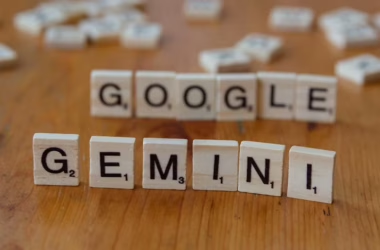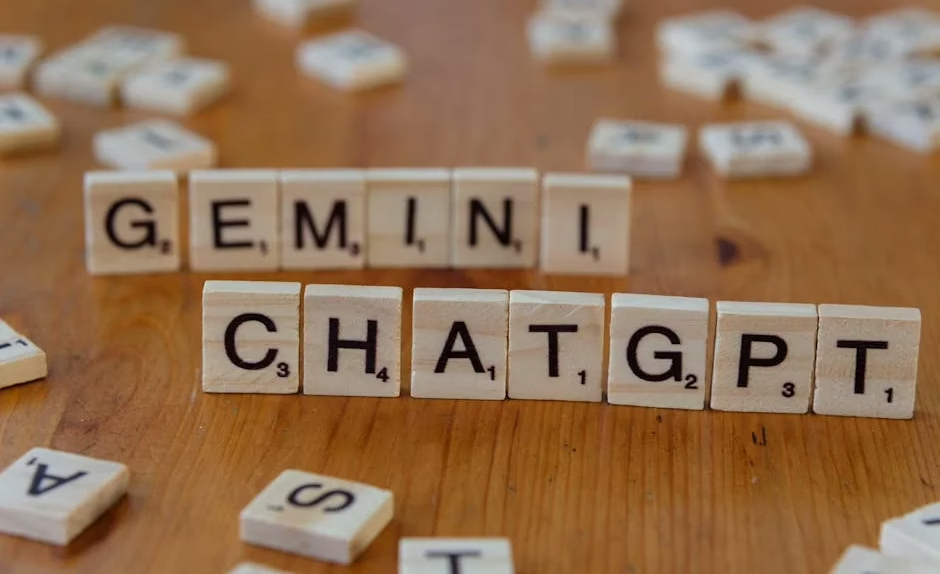

Major AI image generation platforms are rolling out significant updates that make creating visual content more intuitive and personalized than ever before. Google announced this week that its Gemini AI will integrate personalized image generation powered by “Nano Banana” technology, while the company also unveiled Gemini 3.1 Flash TTS for expressive AI speech control. These developments come as DALL-E, Midjourney, and Stable Diffusion continue to compete for dominance in the rapidly evolving AI art generation space.
The updates represent a shift from generic prompt-based image creation to AI systems that understand user preferences and context without explicit instructions. This evolution makes AI image generators more accessible to everyday users who may struggle with crafting detailed prompts.
Google Gemini Gets Personal with Image Generation
Google’s latest update to Gemini introduces personalized image generation that leverages your existing Google account data to create more relevant visuals. According to Google’s announcement, the Nano Banana-powered feature can access information from Gmail and Google Photos to understand your preferences without requiring detailed prompts.
Key features of the personalized system include:
• Context awareness – Instead of typing “Generate an image of my dream home, my interests are tennis and music,” users can simply say “Design my dream home”
• Photo label integration – The system recognizes names and groups from your Google Photos, understanding terms like “Family”
• Transparent sourcing – A “sources” button shows how Gemini derived context for image generation
• Reference photo support – Users can upload reference images by clicking the “+” icon
The feature will initially be available to Plus, Pro, and Ultra subscribers in the United States, with plans to expand to Chrome desktop and other users soon. Google acknowledges that the AI might misinterpret context and encourages user feedback to improve accuracy.
Voice-Controlled Image Creation with AI Speech
Alongside personalized image generation, Google introduced Gemini 3.1 Flash TTS, a next-generation AI speech model that brings voice control to creative workflows. This technology allows users to direct AI image generation through natural speech commands with granular control over vocal style and pacing.
The new speech system offers:
• Audio tags for precise vocal control using natural language commands
• Support for 70+ languages making it globally accessible
• SynthID watermarking to identify AI-generated audio and prevent misinformation
• Integration with Google AI Studio for voice fine-tuning and consistent settings export
This voice integration represents a significant step toward more intuitive creative workflows, allowing users to describe their vision naturally rather than typing complex prompts.
How This Compares to DALL-E and Midjourney
While Google advances personalization and voice control, established players like DALL-E and Midjourney continue to focus on image quality and artistic capabilities. DALL-E, developed by OpenAI, remains popular for its integration with ChatGPT and ability to generate highly detailed, realistic images from text descriptions.
Midjourney has carved out a niche among digital artists and designers with its distinctive artistic style and community-driven approach. The platform excels at creating stylized, artistic images that often have a painterly or illustrative quality.
Stable Diffusion, being open-source, offers the most customization options for technical users who want to modify the underlying model or run it locally. However, this flexibility comes with a steeper learning curve compared to the more user-friendly interfaces of commercial alternatives.
The competitive landscape shows each platform developing distinct strengths: Google focuses on personalization and integration, DALL-E emphasizes realism and ChatGPT synergy, Midjourney targets artistic expression, and Stable Diffusion provides open-source flexibility.
Real-World Applications for Everyday Users
These AI image generation improvements translate into practical benefits for various user scenarios. Content creators can now generate personalized social media visuals by simply describing their brand aesthetic once, with the AI remembering preferences for future creations.
Small business owners benefit from the personalized approach when creating marketing materials. Instead of learning complex prompt engineering, they can describe their business context once and generate consistent branded imagery for websites, flyers, and social media.
Educators and students find voice-controlled generation particularly useful for creating visual aids and presentations. The ability to speak naturally about concepts and have them visualized removes technical barriers that previously limited classroom adoption.
The integration with existing Google services also means personal users can easily create custom artwork for family events, incorporating faces and preferences from their photo libraries without manual prompt crafting.
Privacy and Ethical Considerations
While personalized AI image generation offers convenience, it raises important questions about data usage and privacy. Google’s system accesses personal information from Gmail and Google Photos to provide context, which some users may find concerning.
Key privacy considerations include:
• Data transparency – Users should understand what personal information the AI accesses
• Control mechanisms – The ability to limit or revoke access to personal data
• Watermarking standards – SynthID helps identify AI-generated content but adoption varies across platforms
• Consent frameworks – Clear opt-in/opt-out options for personalization features
The introduction of SynthID watermarking in Google’s speech system represents a positive step toward responsible AI deployment, helping users identify synthetic content and reducing potential for misinformation.
What This Means
The evolution of AI image generators toward personalization and voice control signals a maturation of the technology from experimental tool to practical creative assistant. Google’s integration of personal data creates more intuitive user experiences but also highlights the ongoing tension between convenience and privacy in AI applications.
For consumers, these updates lower the barrier to entry for AI-generated content creation. The shift from technical prompt engineering to natural language interaction makes these tools accessible to users who previously found them intimidating or complex.
The competitive dynamics suggest we’ll see continued innovation in user experience design rather than just raw image quality improvements. As the technology becomes more mainstream, success will depend on how well platforms balance powerful capabilities with user-friendly interfaces and responsible data practices.
FAQ
Q: Do I need technical skills to use the new personalized image generation features?
A: No, the new features are designed to work with natural language. You can simply describe what you want in plain English, and the AI uses your existing data to add relevant context automatically.
Q: Is my personal data safe when using personalized AI image generation?
A: Google states that personalization features access your Gmail and Google Photos data to provide context, but you can provide feedback and control what information is used. Review your Google account privacy settings to understand data usage.
Q: Which AI image generator is best for beginners in 2024?
A: Google’s Gemini with personalization features offers the most beginner-friendly experience, followed by DALL-E integrated with ChatGPT. Midjourney requires more artistic knowledge, while Stable Diffusion is better suited for users with technical backgrounds.
Related news
Sources
For a side-by-side look at the flagship models in play, see our full 2026 AI model comparison.